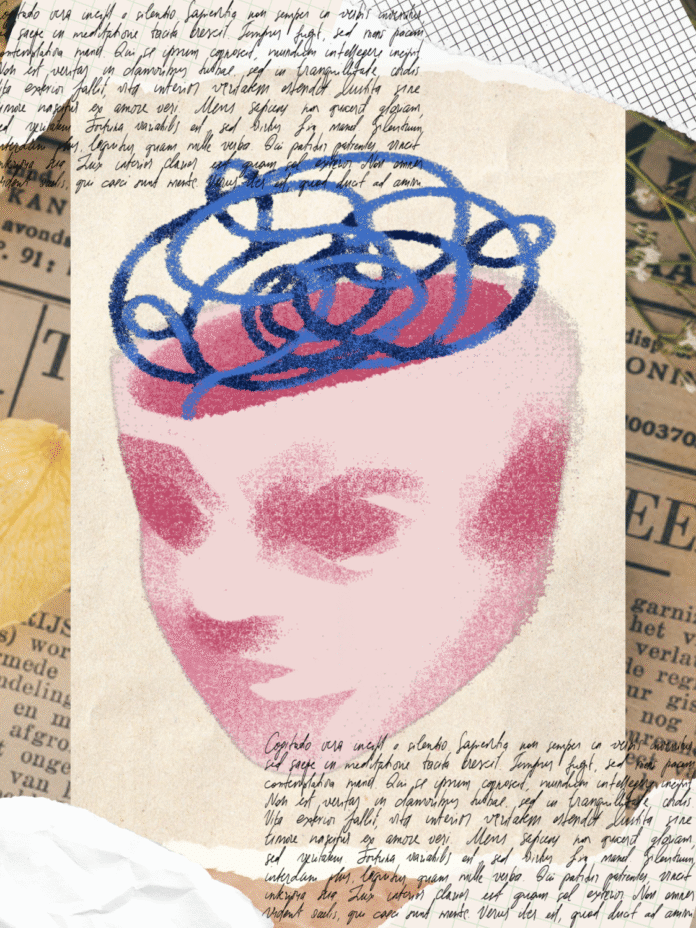
Have you ever questioned yourself why it felt so natural to delay things that need to be done? This happens to everyone at all ages. Children want to finish chores later. Adults want to put off cleaning the houses in the next few days instead. Most, if not all, people have done something similar. In particular, it’s the most obvious for students. For example, it’s me. Since Spring break, I have been completing tasks very near the end of the deadlines. Eventually, I ran out of time for the charged articles that I put off until the last week before finals. As I’m writing this article, I was very confident this is the consequence of “procrastination” (which I am not exactly happy about). Or perhaps it wasn’t just procrastination?
What Exactly is Procrastination?
According to educators Ramadhani and others, procrastination is defined as “the tendency to delay important tasks despite knowing the negative consequences” (Ramadhani et al., 2026). It is an occurrence where people delay doing what they want to do or what they have to do by a certain deadline, potentially leading to loss of productivity, poor performance, and increased stress (Rad et al., 2025). Psychology Today, the world’s largest mental health and behavioral science destination online, added to the definition that procrastinators may deliberately look for distractions and it tends to reflect a person’s struggles with self-control. These definitions explain what happened to me.
What Leads to Procrastination?
Students procrastinate for different reasons. Based on 27 studies, procrastination might be contributed by fear of failure, perfectionism, test anxiety, low motivation, and difficulties with emotional regulation (Ramadhani et al., 2026). In a different study in Iran, procrastination is a behavior observed in 80-95% of the 290 students (Rad et al., 2025). The study concluded that academic procrastination is correlated with academic self-efficacy and emotional regulation. Students who had better academic self-efficacy show less academic procrastination, and vice versa for those who had problems regulating their emotions. Other reasons include we do not enjoy doing the tasks, want to avoid making ourselves unhappy, or we fear that we won’t do them well (“Psychology Today”, n.d). In contrast, I found these hard to apply on myself. During my first year in college, I experienced all these feelings, yet I don’t think procrastination occurred to me until later semesters. This made me wonder whether submitting assignments just minutes or seconds before the deadline had given me the impression that I was doing things “right” under pressure.
Others suggested that procrastinators believe they perform better under pressure. However, research shows otherwise; instead, procrastinators form “habit of last-minute work to experience the rush of euphoria at seemingly having overcome the odds.” (“Psychology Today”, n.d) This is true on a personal level as I convinced myself the same thing.
Why is It Not Just Procrastination?
What happens when there are too many tasks at hand? We make a priority queue (CS joke). Clémence Prosen, a French educator and creative worker, believed it is not procrastinating when a person chose to prioritize certain tasks, rest, and finish all those delayed tasks later (2021). This is true for Georgia Tech students. I have heard how students taking too many classes weigh their coursework and prioritize some over the others. For example, if one project is worth 10% in a course and a homework assignment worth 5% in a different course due the same night, students prioritize the first one. However, if they need a better grade in the second class, the latter might be prioritized. This ends up with basically sacrificing those with low priority. Unless, they are perfectionists and want to keep both.
Historically, I used to work on my assignment over the breaks to have an easier time with deadlines. However, over the last Spring break, I made the decision to not work on my coursework, believing I will have enough time for them. I ended up catching up with deadlines as soon as we came back to school. Everything would have been fine if not for more tasks to come up unexpectedly outside of schoolwork. So, a cycle began. I have to catch up on delayed tasks in the queue. According to Psychology Today, “habitual procrastinators can experience reduced well-being in the form of insomnia or immune system and gastrointestinal disturbance.” Those late-night sleeps catch up and tire me out, causing my body to seek rest. Then, as I took my sweet time to rest (or eventually being distracted), the next tasks are due. It is worse when I try to perfect those works (draw it versus using a pre-existing image) and end up spending too much time on one assignment. This puts a strain on my body, leading to me needing even more time to rest.
Personal Reflection
I figured the reason was due to my change in responsibilities in recent semesters. Procrastination with or without the priority queue wasn’t a problem before when my other responsibilities have a fixed schedule. Now, I cannot predict my schedule for next week. My rest time might have taken more time than needed as I got too comfortable with delaying work at a reasonable pace. Changes are needed to my time management and bad habits on account of these unexpected tasks. Hopefully I can work this out over the summer and you will not see another procrastination reflection in the next few months. Finally, I have found a few strategies that might keep me going forward:
- Set soft deadlines a day before the real one (or even earlier for time-consuming projects)
- Use time-block for coursework periods with limited access to distracting sources
- Allow daily daily buffer time for unpredictable responsibilities outside of coursework
References:
Hassan, M. M. (n.d.). Time Management. Public Domain Pictures. Retrieved 2026, from https://www.publicdomainpictures.net/en/view-image.php?image=613653&picture=time-management.
Prosen, C. (2021, February 3). Resting or procrastinating? that is the question. Clémence Prosen. https://www.clemenceprosen.com/post/resting-or-procrastinating?srsltid=AfmBOorvKggPmnD-5vCd8JBgnmNg09V8y7uZvyOMvY4vBrSrSOk3eoac
Rad, H. F., Bordbar, S., Bahmaei, J., Vejdani, M., & Yusefi, A. R. (2025). Predicting academic procrastination of students based on academic self-efficacy and emotional regulation difficulties. Scientific Reports, 15(1). https://doi.org/10.1038/s41598-025-87664-7
Ramadhani, E., Setiyosari, P., Indreswari, H., Setiyowati, A. J., & Putri, R. D. (2026). Academic procrastination: A systematic review of causal factors and interventions. Journal of Behavioral and Cognitive Therapy, 36(1), 100552. https://doi.org/10.1016/j.jbct.2025.100552
Sussex Publishers. (n.d.). Procrastination. Psychology Today. https://www.psychologytoday.com/us/basics/procrastination