
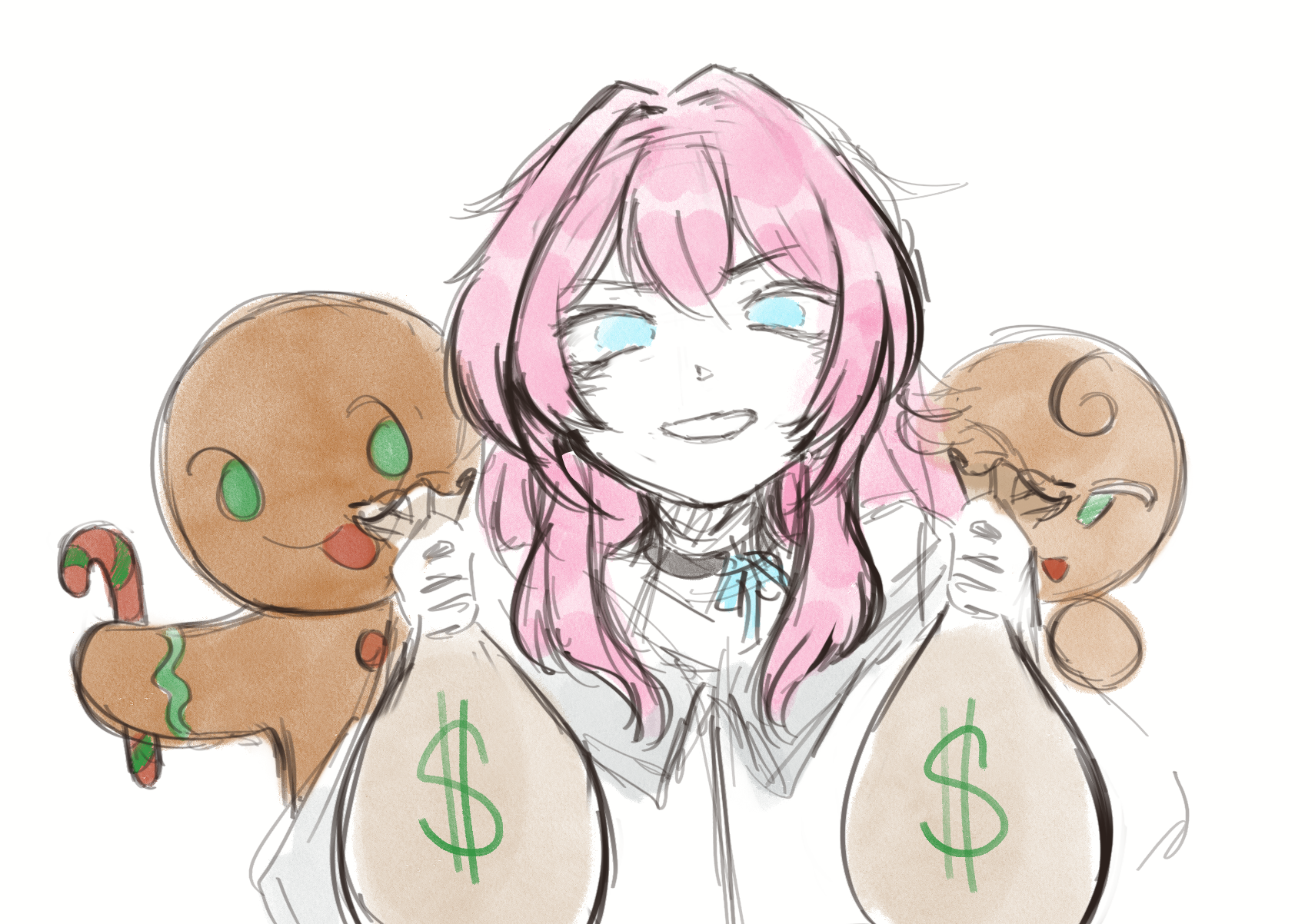
When someone tells you that they have a gambling addiction, what is the first thing you think of? The most stereotypical image would be a person in the casino, playing on slot machines. Perhaps the first thing that comes to mind is online sports betting instead. But has anyone considered video games?
Rising in Popularity: GACHA
One of the most popular genres of games that have developed throughout the past few years include a “gacha” system. The term stems from the Japanese word “gachapon”, which refers to small machines where people can exchange coins for a random toy capsule (Reyes, 2025).
According to Epic Games, some of their most popular games include Genshin Impact, Honkai Star Rail, Wuthering Waves, Zenless Zone Zero, and Where Winds Meet all employ a gacha system. While these games are free to play, they often include gacha systems as a way to win prizes such as playable characters, weapons, or cosmetics. Users can either play the game and earn in-game currency or pay real money to buy “pulls” for these games. The “pulls” are then used in the gacha system, where players try their chances at getting the prize that they need. These are often characters or cosmetics that are quite rare, incentivizing players to keep playing or spending money to get the prizes that they want.
In a way, this can be seen as gambling. Players are often paying real money for the random chance at winning a prize that is not guaranteed to them. Although real money is not required, some games make it difficult to earn pulls through gameplay only.
The Psychology of Addiction
Addiction lacks a universal definition in psychology, making it difficult to determine what is truly an addiction or not. According to one article, some have defined addiction as “continual, excessive use and ‘loss of control’” of something to the point of dependence (Wanigaratne, 2006). In other words, addiction can be defined as the use of something to the point where it is no longer controllable for a person. They simply keep going back to it, as if they are dependent on it. With this definition, anything can be an addiction, not just substances. Sure, things like drugs and alcohol are some of the most common ideas associated with addiction, but with this definition, recreational activities such as games or gambling can be addictive as well.
There are several different theories that psychologists have come up with to try and explain addiction. Some have theorized that it is a result of conditioning, where the results of the addictive behavior can act as positive reinforcers the same way food or sex have been used in the conditioning process (Wanigaratne, 2006). For example, gacha games often offer the most desirable prizes as the rarest ones, making it quite difficult for players to get the item that they want. However, these games often have a “pity system”, where there is a guaranteed chance of receiving a rarer item based on the number of times a player has already pulled (Reyes, 2025). Although the specific item that the player wants is not guaranteed, they are given a reward for continuing to feed into the behavior more and more. Additionally, once the player receives the item that they want, the event can act as a positive reinforcer, conditioning players to continue to buy more pulls as they did before.
Issues with Gambling on the Internet
As always, enjoying mobile games or betting does not always equal addiction. However, it is important to understand how making such games available to the general public can be dangerous. For instance, the games on the Internet have certainly made gambling much more accessible, which can make it easier for people to develop harmful habits. Some studies have noted that mobile app users typically visit the apps on their phone on a frequent, habitual basis, putting those who gamble on the Internet at a higher risk than those who do not (James, O’Malley, & Tunney, 2016). Most of the games mentioned before are available on mobile devices as well, making them extremely easy to play at any time, anywhere. Although this does not necessarily mean that they can result in harmful habits, it is certainly easy for a person to play the game every single day and regularly come back to paying for more pulls whenever they want.
This does not mean that gacha games should be banned overall, but it is important for parents and players to be careful when playing. Make sure to take breaks and think before making any big purchases on a game!
Wanigaratne, S (2006). Psychology of addiction. Psychiatry, 5(12), 455-460. https://doi.org/10.1053/j.mppsy.2006.09.007
James, R.J.E., O’Malley, C., Tunney, R.J. (2016). Understanding the psychology of mobile gambling: A behavioral synthesis. British Journal of Psychology, 108(3), 608-625. https://doi.org/10.1111/bjop.12226
Reyes, J. (2025). Gacha games explained: Banners, pulls, pity systems, and more. Epic Games. https://store.epicgames.com/en-US/news/gacha-games-explained-banners-pulls-pity-systems-and-more