
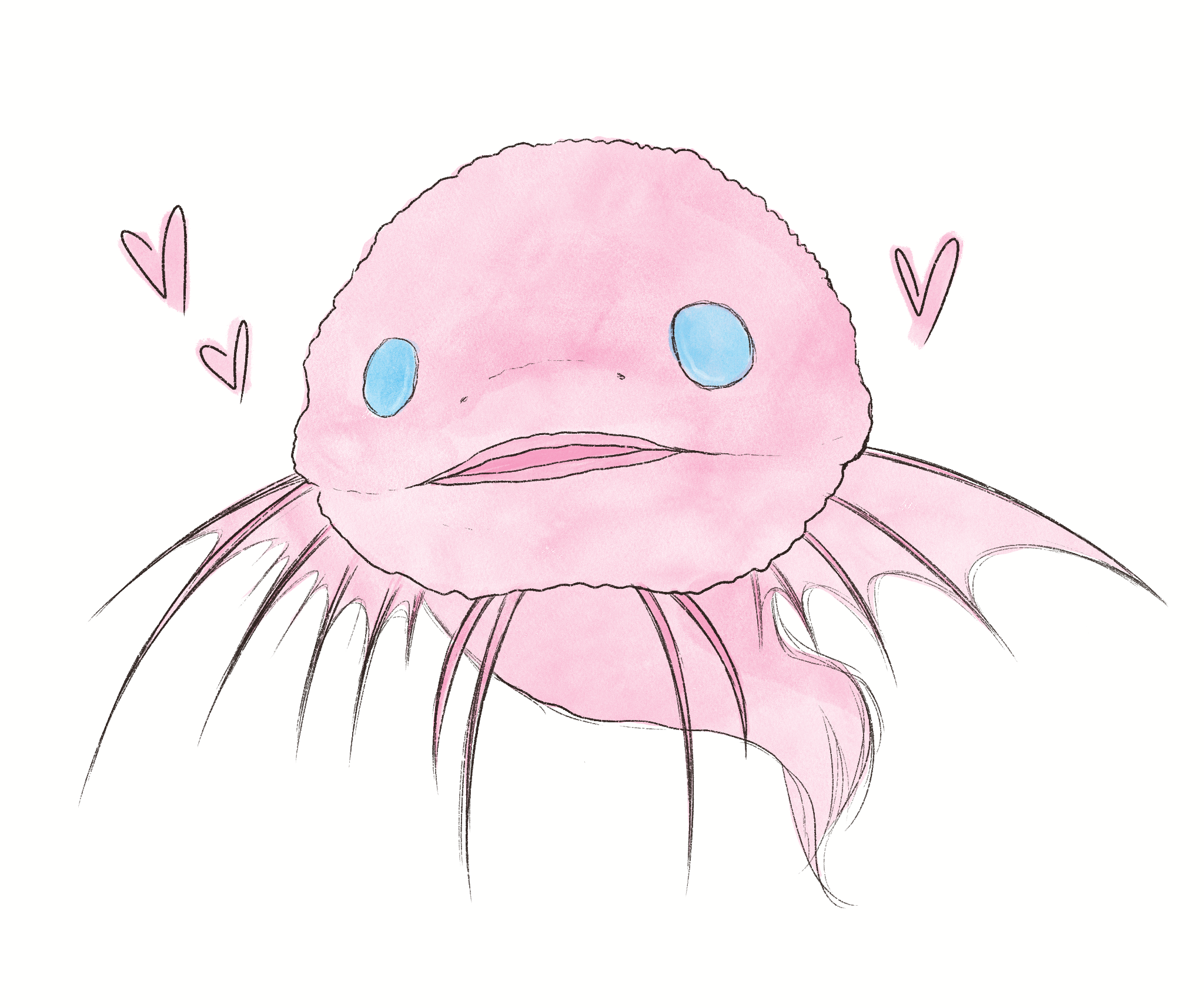
People often say that humans have only discovered 5% of the ocean to this day. While this exact number is often argued, it is no secret that much of the ocean is unknown to us. However, scientists have recently made a discovery of a new fish in the depths of the sea: the bumpy snailfish.
What is a snailfish?
The bumpy snailfish, also known as Careproctus colliculi, belongs to the Lipradae family, which is one of the only few species on Earth that have adapted to live between what are considered the “abyssal deep” and “hadal deep” parts of the ocean (Scharzans & Gerringer, 2023). These parts of the ocean are typically extremely difficult to live in due to the immense water pressure, darkness, and lack of food. However, it seems that these depths are where snailfish (fish in the Lipradae family) thrive.
There are currently 450 accepted species of snailfish. Scientists identify them through their lack of scales along with a suction disk on their pelvis, which allow them to attach to other surfaces (Gerringer et al., 2025).
Discovery of the Bumpy Snailfish
According to the Monterey Bay Aquarium Research Institute, the fish have large heads, while the rest of the body is made up of a jelly-like substance (Nava, 2025). Snailfish are given their name because they have a disk on their bellies that allow them to attach to the ocean floor, much like a snail would (Nava, 2025). This newly discovered version of the snailfish is a light pink color, a round head, large eyes, and a bumpy texture on its skin. Thus, it was named the bumpy snailfish.
Researchers describe the hadal trenches as depths greater than 6000 meters below sea level, where it is easier to study snailfish that father around bait falls (Gerringer et al., 2025). However, it is more difficult to find them in the abyssal depths, which are around 3000 to 5000 meters deep in the ocean (Gerringer et al., 2025). This is what makes the bumpy snailfish special, as it is a new lifeform in the abyssal depths of the ocean for researchers to study.
In order to determine if these were a new species of fish, clips of the fins were collected from dissected snailfish. These tissues were used for DNA extraction, where researchers were able to compare the DNA sequences of previous snailfish to this one (Gerringer et al., 2025).
Works Cited
Gerringer, M. E., Suplicz, S., Palmeri, J.L., Fregosi, L., Woodworth, B.H., McMahon, E., Shepard, M., Peoples, L.M., Drazen, J.C. (2025). Descriptions of Three Newly Discovered Abyssal Snailfishes (Liparidae) from the Eastern Pacific Ocean. Ichthyology & Herpetology, 113 (3), 487-506. https://doi.org/10.1643/i2024069
Nava, R. (2025). MBARI’s advanced underwater technology reveals a new species of deep-sea snailfish. Monterey Bay Aquarium Research Institute. https://www.mbari.org/news/mbaris-advanced-underwater-technology-reveals-a-new-species-of-deep-sea-snailfish/
Scharzhans, W.W., Gerringer, M.E. (2023). Otoliths of the deepest-living fishes. Deep Sea Research Part I: Oceanographic Research Papers, 198. https://doi.org/10.1016/j.dsr.2023.104079