
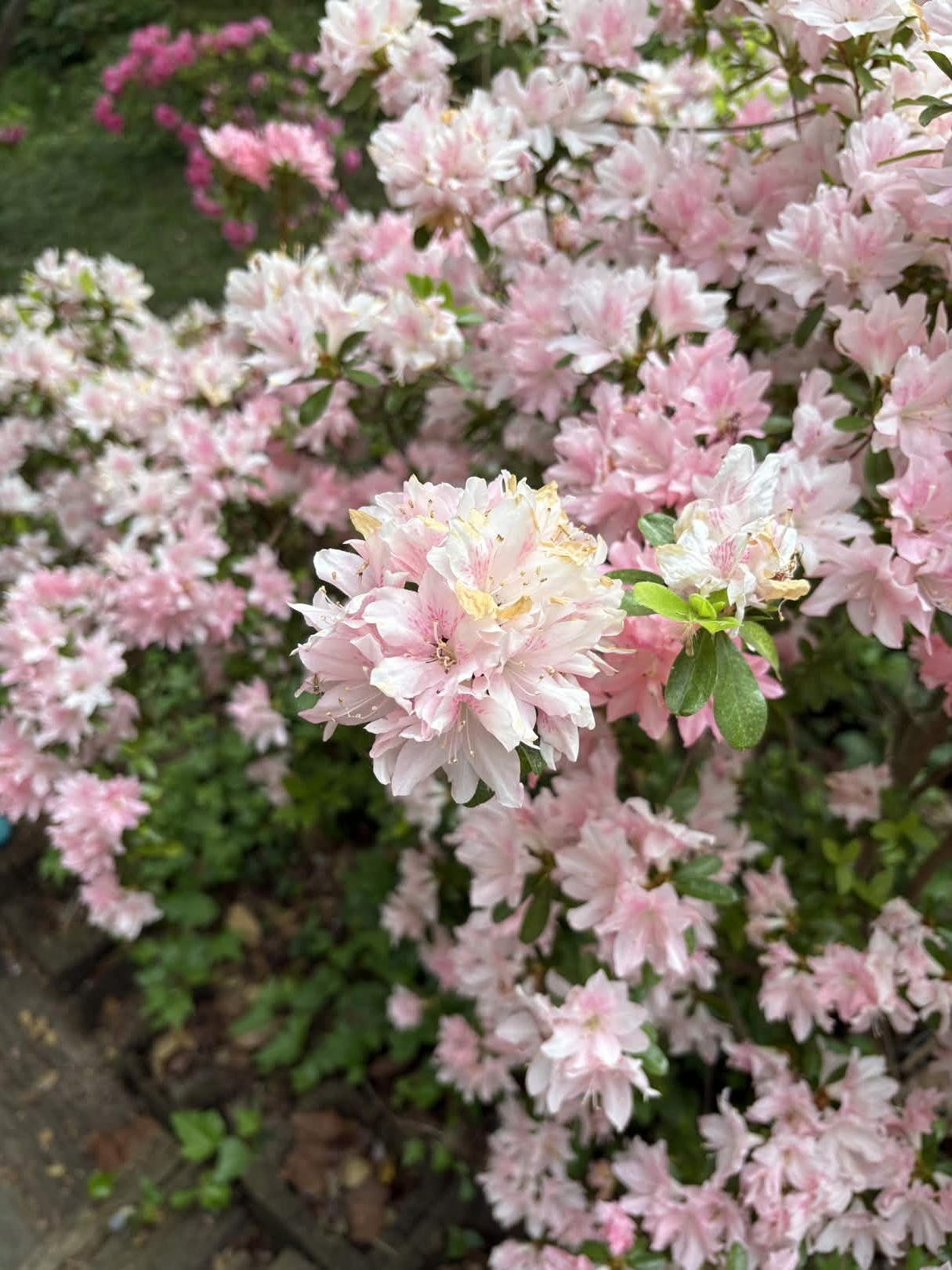
It’s currently spring at Georgia Tech, which means tons of flowers are in bloom. Around the end of March and beginning of April, students, staff, and visitors can all take a walk around campus to take in the natural beauty of Georgia Tech.
Here are some of the plants that they may run into:
Piedmont Azaleas:
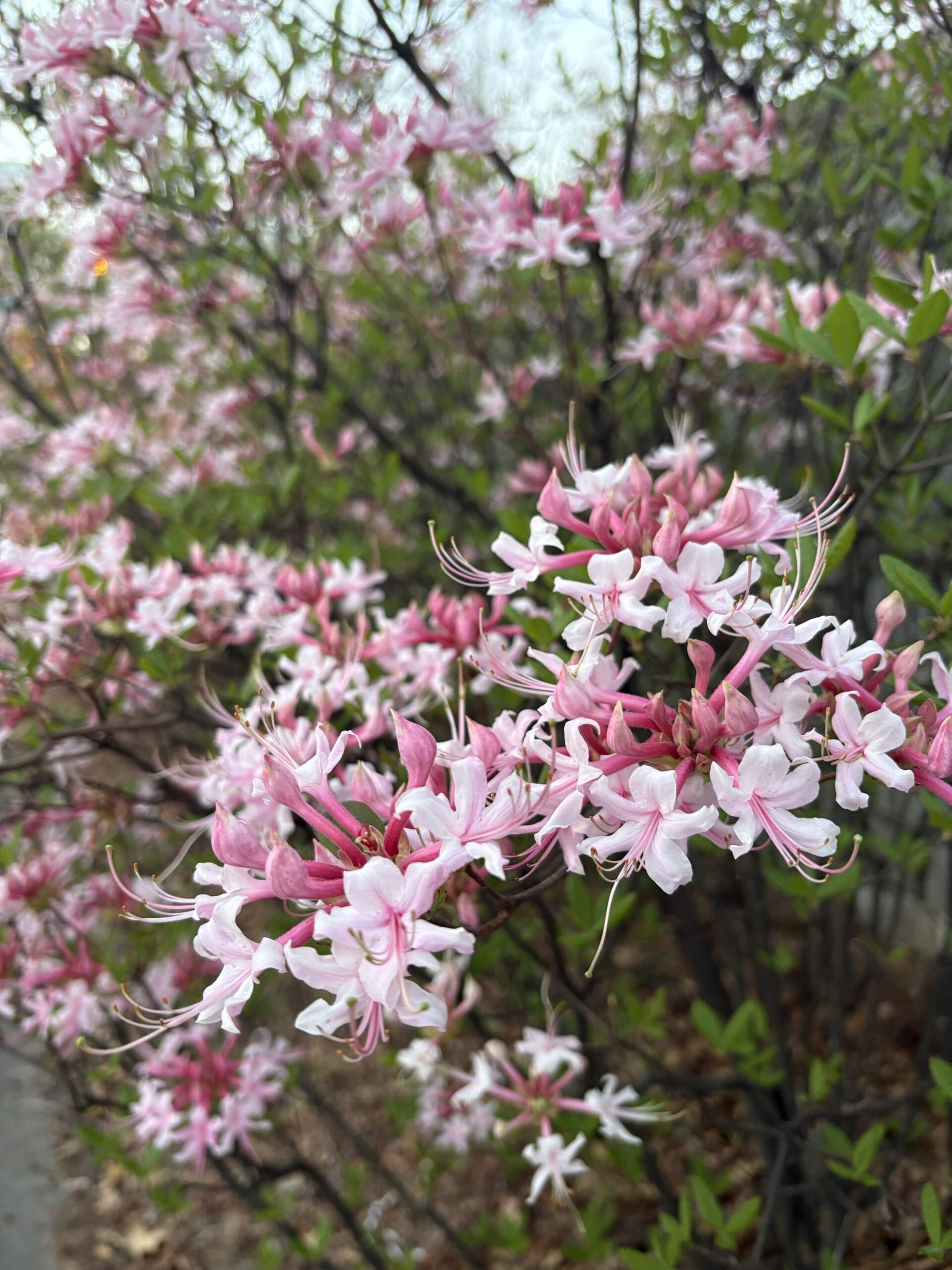 One of the first few flowers that one might notice around Tech are the Piedmont Azaleas, which often grow in bushes on the walkway up to the Howey Physics building.
The Piedmont Azalea, also known as Rhododendron canescens, is a flower native to Georgia. These azaleas bloom early in the spring, from mid-February through March (Wade, Braman, & Woodward, 2022).
They tend to grow in the earlier parts of spring and produce a sweet, musky scent in the air. (Yadav et al., 2019). These flowers often attract a number of pollinators, including butterflies, bees, and hummingbirds.
Flowering Dogwood:
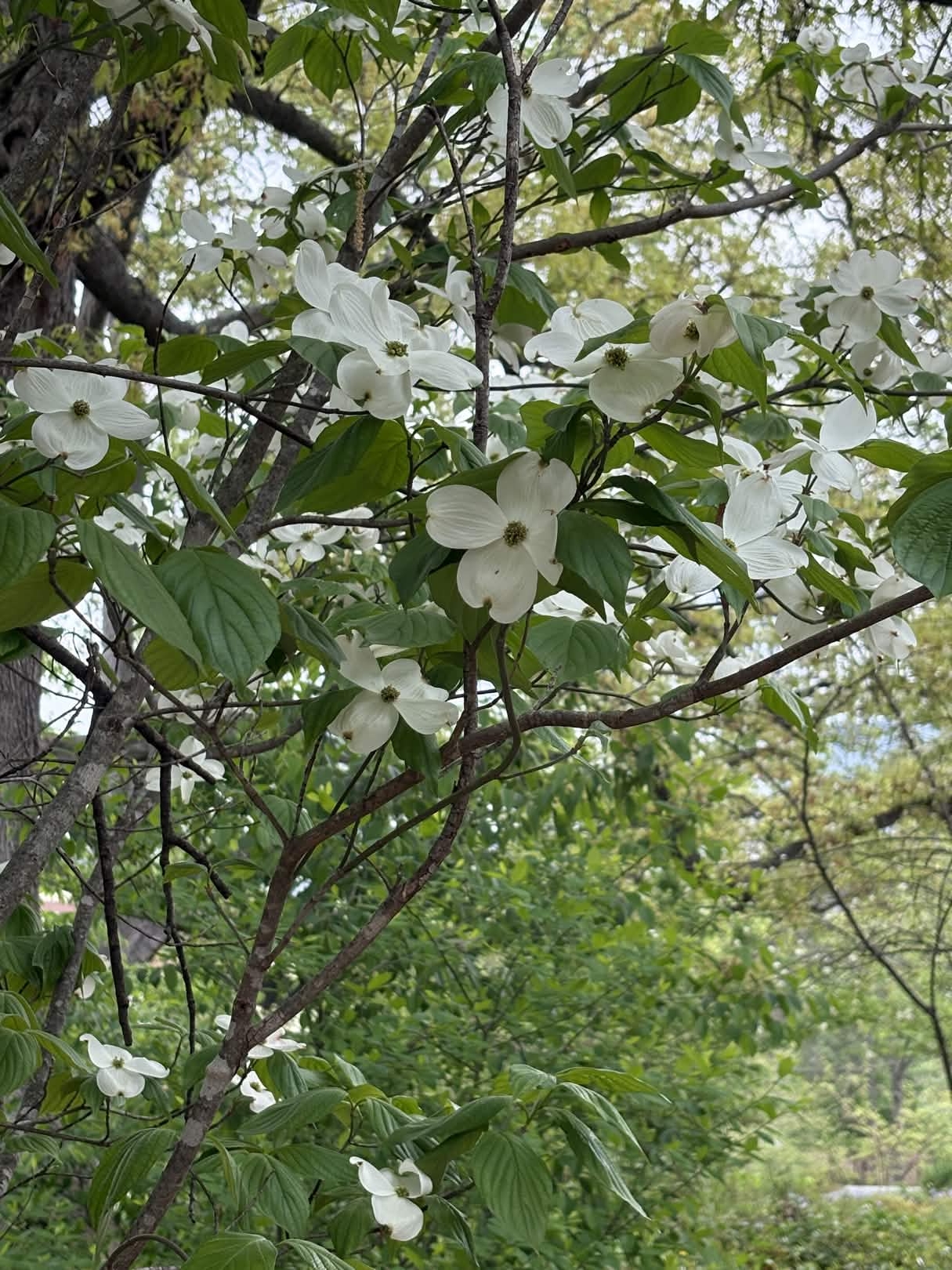 Outside the Kendeda building also lies flowering Dogwood trees, which are known as the Cornus florida.
These trees are often planted throughout Georgia as ornamental trees. This means that the trees are mainly planted for display rather than a more practical function.
However, the species can be extremely beneficial to the environment. Dogwood trees produce leaf litter that decomposes rather quickly, which can improve the soil quality (USDA). Additionally, the plant is an extremely important part of calcium cycling. Plants need calcium to survive, as it is extremely important to the structure of cell walls and plasma membranes. Flowering dogwood trees draw calcium from the soil, cycling it into a more usable form for other plants. (Borer, Sapp, & Hutchinson, 2013).
Philadelphia Fleabane:
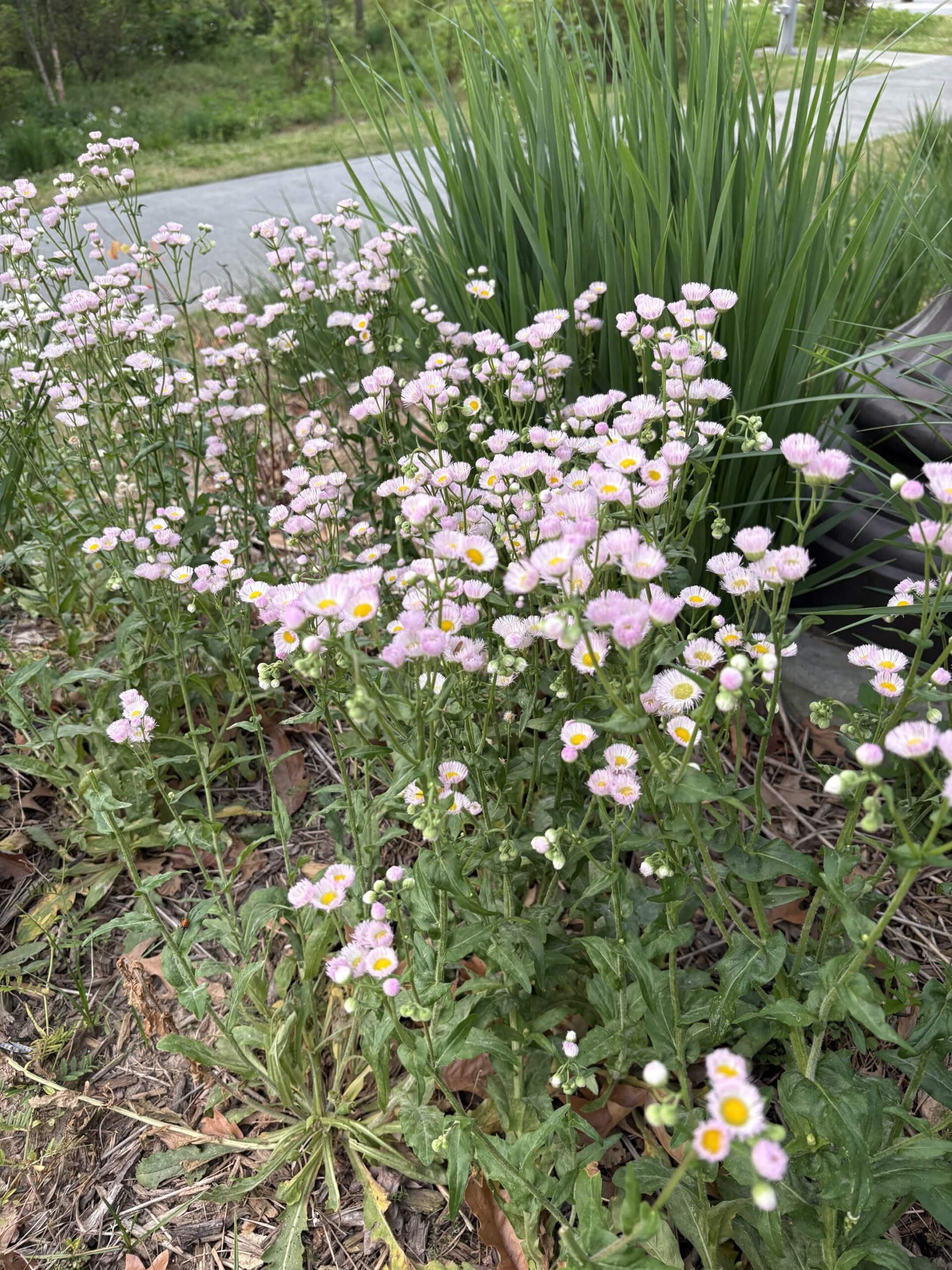 Around the Center Street South apartments are the Philadelphia Fleabane, which are also known as the Erigeron philadelphicus.
These are common wildflowers that grow in moist regions of the United States. They are often considered as weeds if they are not managed properly. This does not mean that they are invasive, but rather that the plant can grow in unwanted spaces if they are not managed properly.
They most commonly bloom during the spring. The flowers will remain open throughout the day time and close back up during the night.
Throughout history, these flowers have had a number of uses, especially in Native American populations. The Philadelphia Fleabane has been made into tea, burned as incense, or simply chewed to treat the common cold in the past (USDA).
Oakleaf Hydrangea:
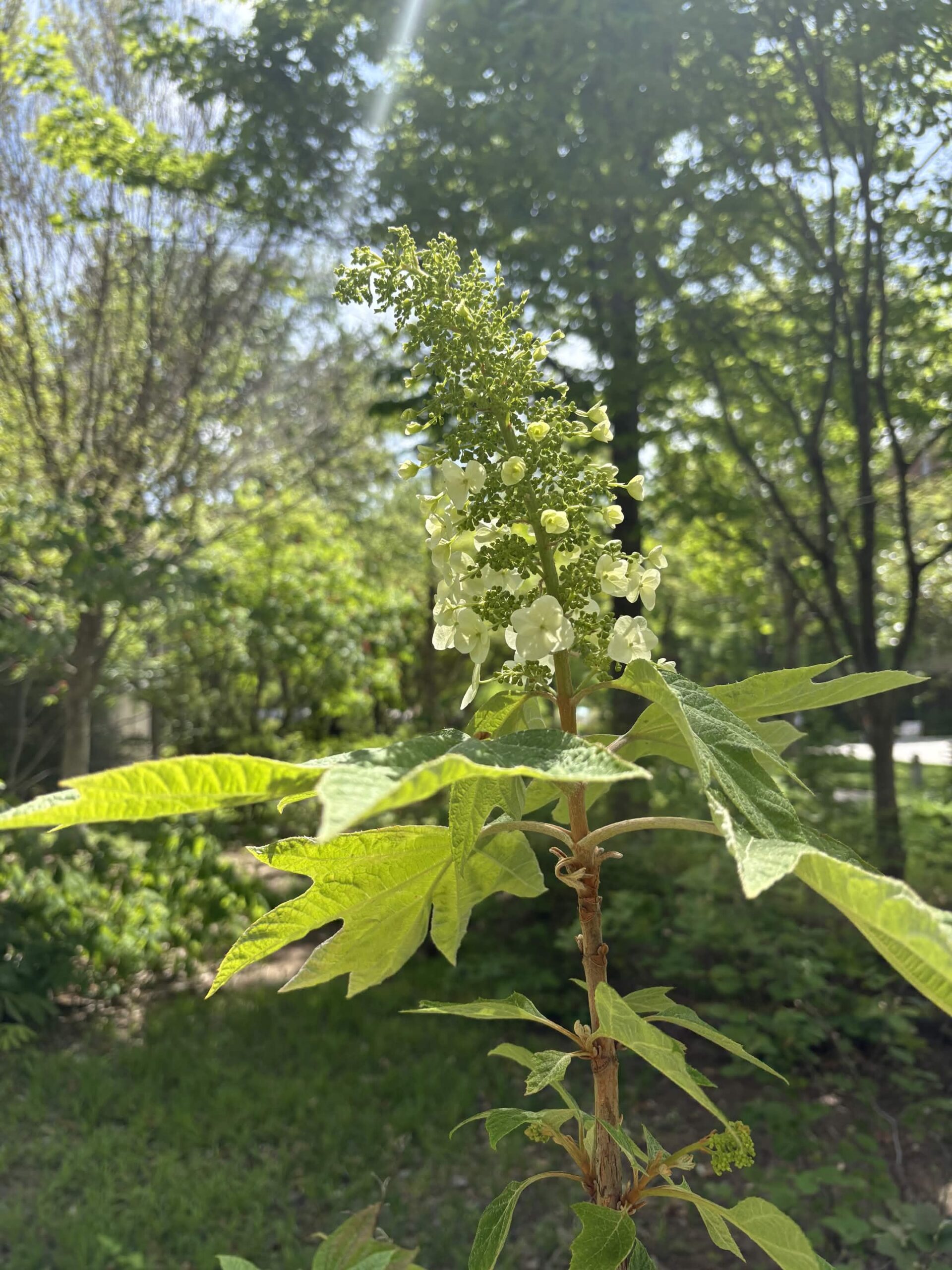
Finally, we have the Oakleaf hydrangeas, which are generally grown in shrubs near the Klaus and Van Leer buildings towards late spring or early summer. These are also known as Hydrangea quercifolia, and they can be found blooming throughout campus. The flowers are native to the southeastern parts of the United States, where they begin to bloom in the early parts of summer.
The plants grow in shrubs, with many cone-like structures that eventually bloom with cream-colored flowers. They are more known to be planted for ornamental purposes.
Although the hydrangea pictured is native to Georgia, there are other species of Oakleaf hydrangeas that were specifically bred for their looks. For example, universities from multiple states in the southeast came together to cultivate the Ruby Slipper Oakleaf. It is a hybrid that starts off white just like the flower pictured and later turns a deep red color as it ages (Reed, 2010).
Works Cited:
Borer, C.H., Sapp, S.G. & Hutchinson, L.H. (2013). Flowering dogwood (Cornus florida L.) as mediator of calcium cycling: new insights are revealed by analysis of foliar partitioning. Trees 27, 841–849 https://doi.org/10.1007/s00468-012-0838-9
Georgia Native Plant Society. (n.d.). Piedmont Azalea (rhododendron canescens). GNPS https://gnps.org/plant/piedmont-azalea-rhododendron-canescens-2/
Reed, S. M. (2010). ‘Ruby Slippers’ and ‘Munchkin’ Oakleaf Hydrangeas. HortScience, 45(12), 1908–1909. https://doi.org/10.21273/HORTSCI.45.12.1908
United States Department of Agriculture National Resources Conservation Service, USDA. (n.d.). PHILADDELPHIA FLEABANE Erigeron philadelphicus L.. https://plants.sc.egov.usda.gov/DocumentLibrary/plantguide/pdf/cs_erph.pdf
United States Department of Agriculture National Resources Conservation Service, USDA. (n.d.). FLOWERING DOGWOOD Cornus Florida L. https://plants.sc.egov.usda.gov/DocumentLibrary/plantguide/pdf/pg_cofl2.pdf
Wade, G. L., Braman, K., Woodward, J. W., (2022) Selecting and Growing Azaleas. UGA Cooperative Extension Bulletin 670. https://fieldreport.caes.uga.edu/wp-content/uploads/2025/08/B-670_6.pdf
Yadav, L. K., McAssey, E. V., & Wilde, H. D. (2019). Genetic Diversity and Population Structure of Rhododendron canescens, a Native Azalea for Urban Landscaping. HortScience, 54(4), 647–651. https://doi.org/10.21273/HORTSCI13840-18