
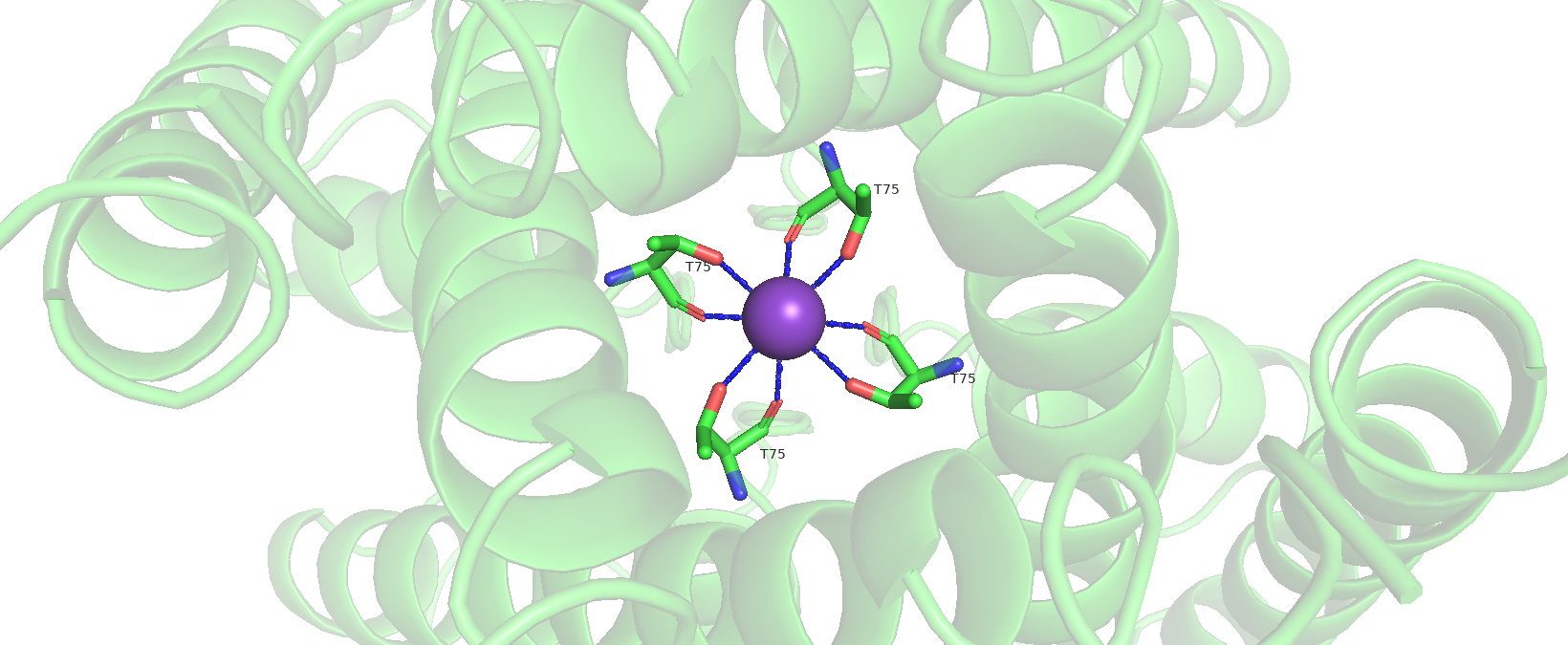
Have you ever wondered how scientists look at proteins or DNA? Here’s the secret- they don’t actually look at physical molecules all that often! Frequently, they use softwares like PyMOL. PyMOL is a widely used molecular visualization program that converts structural data into detailed 3D models, allowing scientists to rotate, zoom, and explore molecules interactively. It was originally developed by Warren Lyford DeLano and has become a standard tool in structural biology and chemistry (DeLano, 2002).
PyMOL works by reading files that contain the exact positions of atoms in three-dimensional space, often obtained from experimental techniques like X-ray crystallography and stored in databases such as the Protein Data Bank. Using this coordinate data, the program reconstructs molecules and displays them in different visual styles, including sticks, spheres, and ribbon diagrams that highlight protein folding patterns. These visualization approaches are essential for understanding how molecular structure relates to function and are widely used in both research and education (Sehnal et al., 2021).
What makes PyMOL especially powerful is how interactive and customizable it is. Scientists can highlight specific regions of a molecule, measure distances between atoms, and even model how molecules might interact with each other- something that is especially important in drug design and biochemistry. Because it translates complex data into intuitive visuals, PyMOL helps bridge the gap between abstract molecular concepts and real-world understanding, making it a valuable tool not just for scientists, but also for students learning about the molecular world.
References:
DeLano, W. L. (2002). PyMOL: An open-source molecular graphics tool. San Carlos, CA: DeLano Scientific. Available at http://www.pymol.org
Sehnal, D., Bittrich, S., Deshpande, M., Svobodová Vařeková, R., Berka, K., Bazgier, V., Velankar, S., Burley, S. K., Koča, J., & Rose, A. S. (2021). Mol* Viewer: Modern web app for 3D visualization and analysis of large biomolecular structures. Nucleic Acids Research, 49(W1), W431–W437. https://doi.org/10.1093/nar/gkab314
Berman, H. M., Westbrook, J., Feng, Z., Gilliland, G., Bhat, T. N., Weissig, H., Shindyalov, I. N., & Bourne, P. E. (2000). The Protein Data Bank. Nucleic Acids Research, 28(1), 235–242. https://doi.org/10.1093/nar/28.1.235