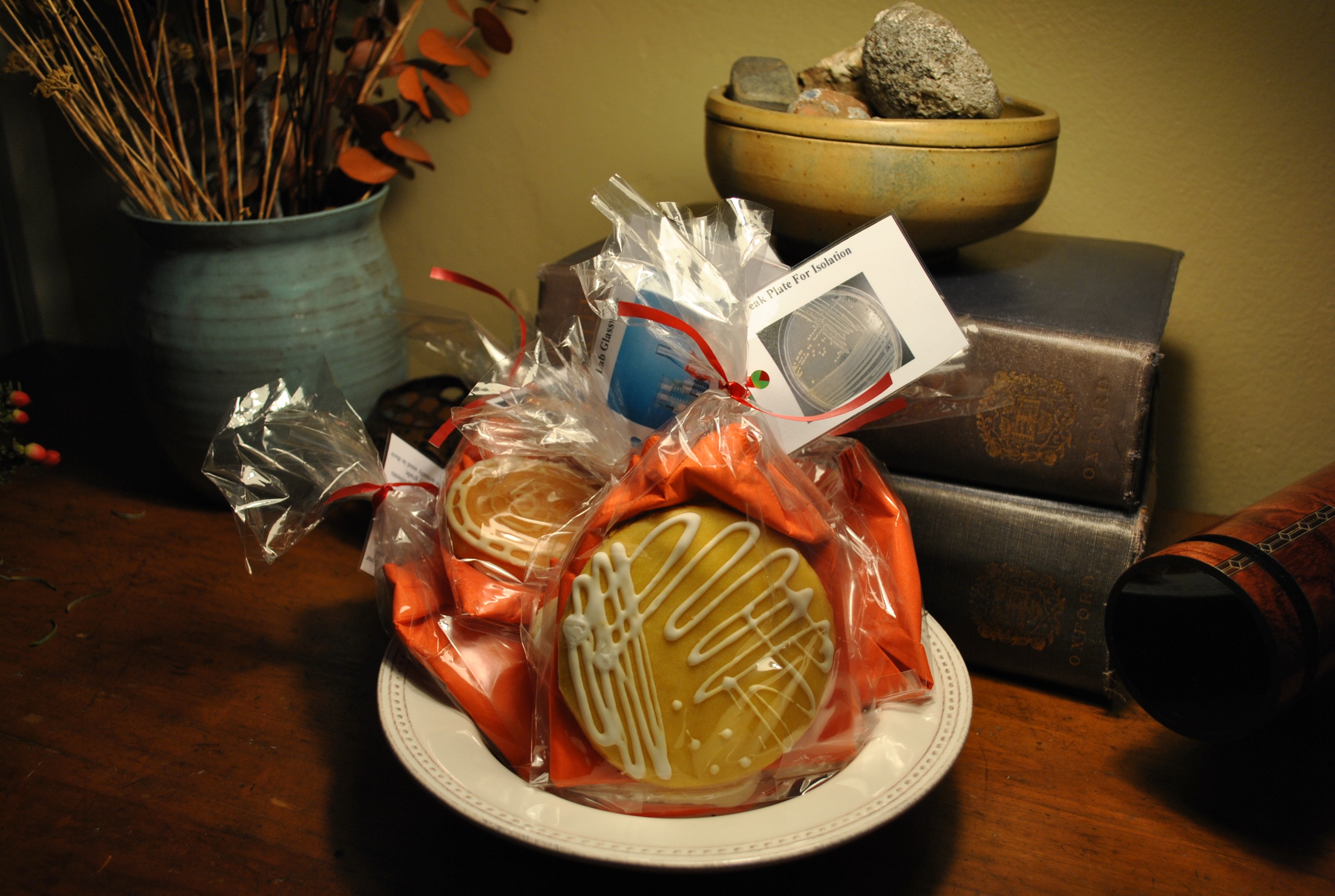
As the holidays approach, you’re probably panicking about finding the perfect gift to get your nerdy friends in STEM while sticking to a college budget. Look no further; I have compiled a list of the best science gifts under $35 available on Amazon Prime.
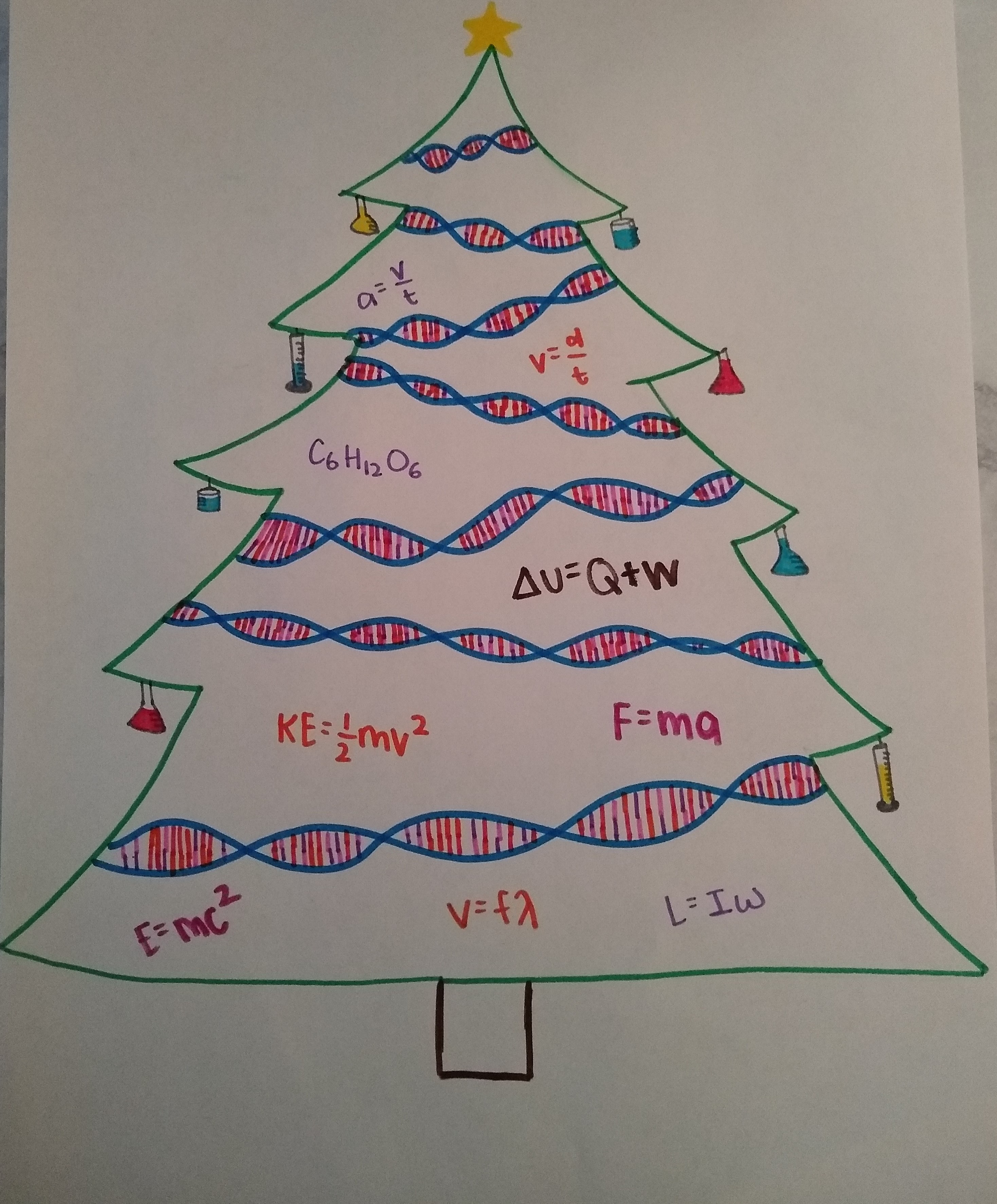
- Storm Glass $19.99
- For who? Atmospheric Scientists and Weather Enthusiasts
- What is it? This water droplet-shaped storm glass will captivate any weather enthusiast. While it may not be nearly as accurate as a real barometer, this gift will be a perfect addition to any room. As the temperature and pressure changes, the liquid inside the glass will change, sometimes forming intricate crystal shapes.
- How does it work? Storm glasses typically contain water, ethanol, ammonium chloride, potassium nitrate, and camphor. The formations created inside the storm glass change based mostly on temperature and to some extent, pressure. Vice-Admiral Robert FitzRoy, a 19th century meteorologist, created a chart that predicted the weather based on the state of the liquid inside the glass. Clear liquid meant clear skies, cloudy liquid with small stars meant thunderstorms, and crystals at the bottom of the glass meant frost. This device was and still is not accurate in predicting the weather, but it is an interesting piece of the history of meteorology.
- USB Digital Microscope $21.99
- For who? Biologists and Chemists
- What is it? This digital microscope can be connected to your computer or Android phone and magnify small objects with incredible detail. It is perfect for any aspiring biologist or chemist who wants to view anything from the structure of salt crystals to individual plant fibers for less than $20.
- How does it work? A digital microscope is essentially an optical microscope with an attached digital camera. These commercially available USB microscopes magnify using a macro lens. Macro photography refers to when the size of the object being photographed is life size (or bigger) on the image sensor of the camera. The image from the camera is transmitted to your computer or phone through a USB cable and is able to be viewed in real time.
- Low Temperature Stirling Engine $33.99
- For who? Engineers
- What is it? Place this Stirling engine on top of a cup of hot water or even ice and watch the wheel turn. It is a great trinket to keep on your desk for when you make your daily cup of coffee, tea, or hot chocolate.
- How does it work? Stirling engines are driven by a temperature difference. When placed on top of a very hot or very cold substance, the temperature difference between the substance and the surrounding air allows the engine to run. A Stirling engine has two cylinders that are connected to each other containing gases; one is heated and one is cooled. When heat is added to the cylinder, the pressure of the gas increases and forces the piston to move down; this forces the other piston to move up. Gas from the heated cylinder moves to the cooled cylinder, which cools the gas and decreases its pressure. The pistons alternate moving up and down and the Stirling cycle repeats.
- Crystal Growing Experiment $17.98
- For who? Chemists and Geologists
- What is it? This kit contains everything you need to grow and display seven beautiful crystals that will reach full size in under two weeks.
- How does it work? Crystals have structures known as lattices that give them their unique shape. Most crystal growing kits come with a solution that contains seed crystal, which makes it easy for crystal to continue to grow until it reaches full size. Molecules in the solution are able to easily interact with the seed crystal and other molecules and form crystal lattices. This is also known as nucleation.
- 5 in 1 Engineer Ballpoint Pen $15.95
- For who? Engineers
- What is it? This ballpoint pen includes five functions every engineer needs: a ruler, a level, a flat head screwdriver, a touchscreen stylus, and of course, a pen. This all-in-one gift is a useful tool your friends will use on a daily basis.
- How does it work? The touchscreen stylus is attached at the top of the pen and can be unscrewed to reveal the flat head screwdriver. The ruler is engraved on the side of the pen, and the level is visible on the side of the pen as well. The ink can easily be replaced, so this gift will be long-lasting.
- Analog Weather Station with Galileo Thermometer $39.95
- For who? Atmospheric Scientists and Weather Enthusiasts
- What is it? This all-in-one weather station has a Galileo thermometer, an analog clock, a hygrometer, and a storm glass. This is a great gift for those who like to keep up with the weather and maybe even practice their own forecasting.
- How does it work? The Galileo thermometer is a very interesting way to determine temperature and was named after Galileo because he discovered that the density of a liquid changes proportionally with temperature. It consists of multiple glass orbs with different densities inside a cylinder filled with clear liquid. As the temperature changes, the orbs move to their respective positions based on their density. This specific thermometer is not very accurate, however, as the orbs correspond only to 4 degree increments from 64-80 degrees Fahrenheit.
- Floating Globe $25.99
- For who? Physicists
- What is it? This seemingly gravity-defying device is perfect for the physicists in your life. A black globe levitates while lit by colorful LEDs and will even rotate with just the push of your finger.
- How does it work? This globe floats with the help of electromagnetism. The C-shaped device surrounding the globe contains an electromagnet at the top, and the globe contains a magnet inside. The force that the electromagnet exerts on the globe equals the force of gravity when the globe is floating.
- Math Cutting Board $26.99
- For who? Mathematicians
- What is it? This 9×12 inch bamboo cutting board is the ideal gift for anyone who wants to slice fruits and vegetables with the precision of 1/8 of an inch. The lines are burnished into the wood and include guides for the different types of culinary knife cuts.
- How does it work? Simply follow the guide lines for your desired cut, use the grid, or follow the angles on the cutting board.
Sources
DeRose, James, & Georg. (2015, May 27). What You Always Wanted to Know About Digital Microscopy, but Never Got Around to Asking. Retrieved December 2, 2018, from https://www.leica-microsystems.com/science-lab/what-you-always-wanted-to-know-about-digital-microscopy-but-never-got-around-to-asking/
Floating Globe. (n.d.). Retrieved December 2, 2018, from https://wonders.physics.wisc.edu/floating-globe/
Galileo thermometer. (2018, July 05). Retrieved December 2, 2018, from https://en.wikipedia.org/wiki/Galileo_thermometer
Macro photography. (2018, October 13). Retrieved December 5, 2018, from https://en.wikipedia.org/wiki/Macro_photography
Nice, K. (2001, May 04). How Stirling Engines Work. Retrieved December 2, 2018, from https://auto.howstuffworks.com/stirling-engine.htm
Optical microscope. (2018, November 25). Retrieved December 2, 2018, from https://en.wikipedia.org/wiki/Optical_microscope#Digital_microscope
Seed crystal. (2018, September 06). Retrieved December 2, 2018, from https://en.wikipedia.org/wiki/Seed_crystal
Storm glass. (2018, June 02). Retrieved December 2, 2018, from https://en.wikipedia.org/wiki/Storm_glass
What is a Storm Glass? Do Storm Glasses Really Work to Predict the Weather? . (n.d.). Retrieved December 2, 2018, from https://wxobservation.com/do-storm-glasses-really-work/