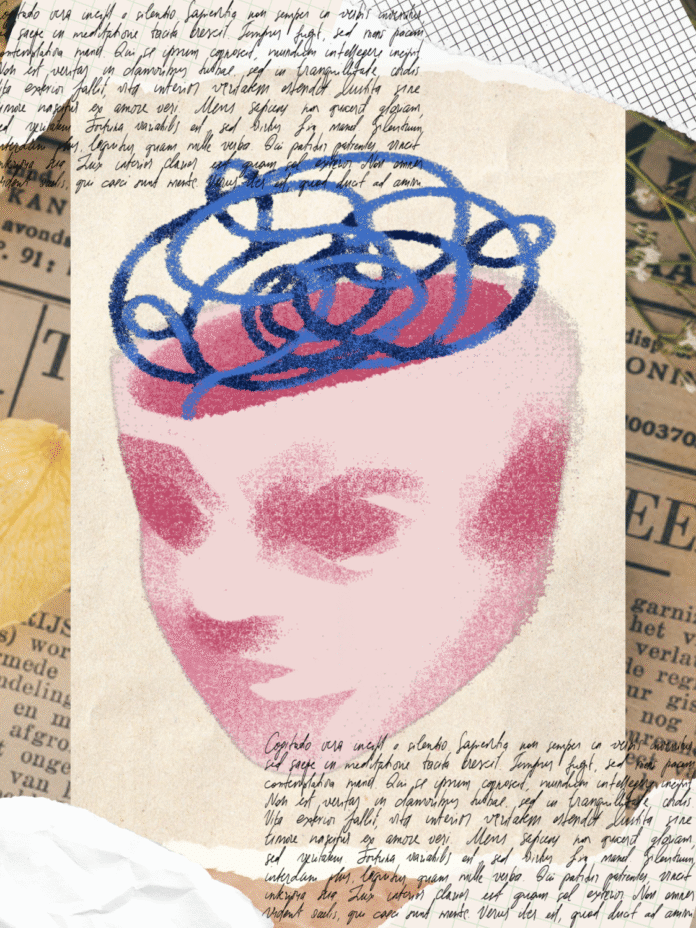
Science communication is an often-overlooked but very important part of furthering the scientific process, and both researchers and publishers often use graphical means to display experimental results and data through figures, as presenting data this way is considered standard within reporting results and finding as it is easily interpretable for a vast array of audiences. However, as a neuroscience student, both involved with research in a computational cognition and neuroAI lab and involved with STEM communication as a communications assistant for an institutional research institute, an interesting nuance to researchers’ use of graphs and figures to portray their results, both statistically, as the results of an experimental analysis, and methodologically, which shows their experimental process, is that while we think that we know what cognitive mechanisms people are using while interpreting these figures, in reality, the neural mechanisms are, for the most part, completely unexplored.
Inherently, almost anyone that you ask would believe that graph and figure comprehension is a visual task; however, research as recent as 2023 published by the National Eye Institute has shown that this might not be as true a heuristic – a mental shortcut or “cheat” that makes solving a problem easier – as initially thought. The National Eye Institute’s research showed that connections to the first region of the brain where visual information is processed, the primary visual cortex (V1), are rather small, accounting for between only 2 and 10 percent of neural connections that would be thought to inform us as to what we are perceiving. This is really interesting from a systems perspective in neuroscience, as this implies that what we are seeing only accounts for a relatively small portion of what we perceive. Therefore, in terms of graph and figure comprehension, the vast majority of neural connections are from other, non-visual, regions of the brain, leading us to believe that our cognitive processing of graphs is largely a top-down process; a process where our understanding is heavily biased by prior experience and not what we are seeing in the moment.
From our understanding of the cognitive processes of how we interpret graphs and figures, many different brain regions could theoretically be responsible for this task; until neuroimaging research is done, we will never know for certain. However, one region of the brain that is non-visual and could be responsible for and contribute to our ability to understand information embedded within graphs is the language network and its associated regions. The language network is a portion of the brain made up of many distinct regions, such as Broca’s and Wernicke’s areas, which are commonly known to be involved with speech generation and understanding, respectively, that neuroscientists know contribute to our linguistic abilities. This region of the brain, along with other associated regions such as the cerebral cortex, suggested by some recent research in the context of semantics (Ivanova et. al., 2025), might play a large role in our ability to understand and interpret graphs and figures.
Additionally, research that has looked at large language models (LLMs), a form of artificial neural networks loosely modeled after how researchers understand the nervous system to process language, has interestingly shown that while really bad at processing graphs and figures, LLMs do technically use language to interpret and draw conclusions as to what they are looking at and pull from prior experience and reinforcement learning (Wang 2025).
Overall, because of this, I believe that our ability to process and understand graphs and figures would rely on another cognitive mechanism, such as language or semantics, for example, where we can “think through” and connect what we are observing in a figure to information that we already know – so this inherent visual task, may not be as much about seeing, as it is about knowing. In general, rephrasing this question to What is the neural basis of data visualization comprehension? to explore The Semantics of Data Visualization is a really interesting idea that sits at the intersection of computational cognition, neuroAI, and STEM communication.
References
Ivanova, A. A., Kauf, C., Gao, R., She, J. S., Kean, H. H., Goldhaber, T., Nieto-Castañón, A., Varley, R., Kanwisher, N., & Fedorenko, E. (2025). Semantic reasoning takes place largely outside the language network (Version 1) [Preprint]. bioRxiv. https://doi.org/10.64898/2025.12.07.692873
National Eye Institute. (2023). Sparse, small, but diverse neural connections help make perception reliable, efficient. U.S. Department of Health and Human Services, National Institutes of Health.
Wang, H. W., Wang, Z., Xu, Y., Chen, Z., Wu, Y., Qu, H., & Hullman, J. (2025). How aligned are human chart takeaways and LLM-generated insights? IEEE Transactions on Visualization and Computer Graphics. https://doi.org/10.1109/TVCG.2024.10681139