I recently went on my first backpacking trip and was able to spend my time immersed in a natural environment. Among those trees and streams of water, I felt a sense of serenity and peace that I do not normally experience in my day to day life in Atlanta. I am not alone in feeling a relief and escape in nature. Research over the last couple decades has consistently demonstrated that time in nature has positive impacts on well being due to stress relieving benefits and increasing cognitive function (Berto, 2014). Environments with these benefits are often referred to as restorative environments and a recent focus in research on the therapeutic benefits of these environments has been an effort to recreate them within VR environments.
So far, the research seems promising. One study exposed participants to a forest nature environment and a neutral environment both utilizing virtual reality. The simulation utilized both visual and auditory sensory components. The natural environment exposure was found to lead to an increase in cognitive performance, lower perceived stress, and higher restorativeness when compared to the neutral environment (Mostajeran et al., 2023). However, in a review of 21 similar studies, the results across the board were more mixed. There is a generally observed decrease in negative effect from exposure to restorative VR environments, but this review noted limited positive affect (Frost et al., 2022).
Overall, where the research on VR based nature interventions seems to be lacking is in comparison between the VR exposure and physical immersion into a nature environment. A key component of VR design that this relates to is the idea of presence vs immersion. Immersion refers to the sensory environment created by the technology and is therefore a reflection of the technology itself. On the other hand, presence is more related to the psychological state of the user and how integrated they feel they are in the environment. Presence is more subjective and can be influenced by the perspectives and experiences of the user (Berkman & Akan, 2019). However, both of these factors influence each other and greater immersion can generally increase feelings of presence. In restorative therapies utilizing VR nature exposure, both presence and immersion are essential, but the immersion is likely lacking.
In nature exposure research, there is a general gap in exploring different sensory modalities. Much of the research is highly focused on visual components. Within VR, visual and auditory components are the easiest to replicate so VR technologies are limited in their scope of creating an immersive sensory experience. For example, a key sensory route of positive affect from nature exposure is olfaction. One study examined the impact of indoor plants on psychophysiological health and cognitive performance, and they looked at both visual and olfactory components of the stimuli. The results indicated that “visual, olfactory and combined stimuli all induced spontaneous neural oscillations related to relaxation or cognitive function, and significant changes in metabolic pathways associated with antidepressant, anti-inflammatory or neuro-protective effects were observed” (Li et al., 2024). Another study compared the effects of visual stimuli and olfactory stimuli in park and forest environments and their results suggested that olfactory stimulation may have a greater role in facilitating stress reduction than visual stimuli (Hedblom et al., 2019).
Overall, the multi-sensory experience seems to be key to reaping the benefits of restorative environments which is something VR environments are currently unable to replicate. Furthermore, VR exposures may be limited temporally. These interventions would provide a brief, non tangible escape from the environment of the regular lives of those in urban environments. But after the interventions, the environment that could be causing higher stress is still present. Looking at the bigger picture, VR interventions are a bandaid on a bullet hole solution to higher stress levels brought on from urbanization. To reach the root of this problem, it may be more effective to examine what could be done to the environments themselves.
So, how can we alter the environments we spend our time in to be better suited for stress reduction and increased cognitive function? Biophilic design!
Biophilic design is the idea of integrating the restorative elements of nature into buildings, cities, and public spaces. The ideas of biophilic design relate to the Biophilia Theory which emphasizes the importance of human interaction with nature on the basis of our evolution alongside it. In Kellert and Calabrese’s book, Biophilic Design: The Theory, Science, and Practice of Bringing Buildings to Life, they outline several key components of biophilic design: direct experience with nature, indirect experience with nature, and experience of space and place (Kellert & Calabrese, 2015). Furthermore, the goals of good biophilic design go beyond allowing people to experience nature in their everyday environments; they aim to also be sustainable both environmentally and economically. Kellert and Calabrese also emphasize experiencing nature through different sensory modalities as a key aspect of designing buildings and cities. One literature review examined evidence for the benefits of biophilic design on wellbeing and found that the direct exposure to nature and the presence of natural elements had the most significant positive impact (Gillis & Gatersleben, 2015).
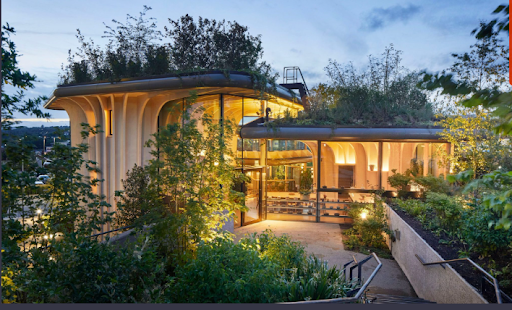
One recent example of Biophilic design in action can be seen in the Living Building Project. This initiative aims to design buildings that are self-sufficient, have a positive impact on individuals interacting with them and with the natural systems involved, and that connect people with natural light, space, air, nature, and food (What is The Living Building Challenge, 2024).
Ultimately, more research is needed for both VR as a restorative approach and biophilic design. However, biophilic design provides a multi-sensory element that VR currently lacks and both increases the level of positive exposure and decreases the source of negative affect. The increased focus on use of VR in the context of nature based restorative therapies has its merits but with the current limitations and the overall unanswered question of if it could truly replicate experiences in nature remaining, it might be better to focus on alternative approaches that could be more effective like changing the environments people are already present and immersed in.
References:
Berto, R.. (2014). The Role of Nature in Coping with Psycho-Physiological Stress: A Literature Review on Restorativeness. Behavioral Sciences, 4(4), 394–409. https://doi.org/10.3390/bs4040394
Berkman, M. I., & Akan, E.. (2019). Presence and Immersion in Virtual Reality (pp. 1–10). https://doi.org/10.1007/978-3-319-08234-9_162-1
Frost, S., Kannis-Dymand, L., Schaffer, V., Millear, P., Allen, A., Stallman, H., Mason, J., Wood, A., & Atkinson-Nolte, J. (2022). Virtual immersion in nature and psychological well-being: A systematic literature review. Journal of Environmental Psychology, 80, 101765. https://doi.org/10.1016/j.jenvp.2022.101765
Gillis, K., & Gatersleben, B.. (2015). A Review of Psychological Literature on the Health and Wellbeing Benefits of Biophilic Design. Buildings, 5(3), 948–963. https://doi.org/10.3390/buildings5030948
Hedblom, M., Gunnarsson, B., Iravani, B., Knez, I., Schaefer, M., Thorsson, P., & Lundström, J. N.. (2019). Reduction of physiological stress by urban green space in a multisensory virtual experiment. Scientific Reports, 9(1). https://doi.org/10.1038/s41598-019-46099-7
Kellert, S. R., & Calabrese, E. F. (2015). The practice of biophilic design. https://biophilicdesign.umn.edu/sites/biophilic-net-positive.umn.edu/files/2021-09/2015_Kellert%20_The_Practice_of_Biophilic_Design.pdf
Li, Z., Zhang, W., Cui, J., Wang, L., Liu, H., & Liu, H. (2024). Biophilic environment with visual-olfactory stimuli contributes to psychophysiological restoration and cognitive enhancement. Building and Environment, 250, 111202. https://doi.org/10.1016/j.buildenv.2024.111202
Mostajeran, F., Fischer, M., Steinicke, F., & Kühn, S.. (2023). Effects of exposure to immersive computer-generated virtual nature and control environments on affect and cognition. Scientific Reports, 13(1). https://doi.org/10.1038/s41598-022-26750-6
What is the Living Building Challenge?. International Living Future Institute. (2024, April 5). https://living-future.org/lbc/