Uncanny Valley


Savannah
Savannah

One month ago, my boyfriend and I went to Savannah for a visit. I’ve always heard there are a lot of nice little stores down pedestrian streets there. As a girl who has no resistance to delicate handicrafts, I couldn’t miss this great opportunity to buy something. Just when I was totally lost in those beautiful pictures and objects, my boyfriend dragged me to the corner of the shop with a mysterious smile. “Look!” He said while pointing to a sculpture. When I glanced at that direction, I couldn’t help exclaiming under my breath. It was a small sculpture of a child’s head. But “he” was so vivid that I almost believed that the two glass beads that made blue eyes on his face were real! Even my boyfriend refused to touch the sculpture because he was so terrified by its similarity to real person.

WechatIMG20
Savannah Railroad Museum

After learning about this hypothesis, I finally understand my fear of those creepy dolls, which are one of the most popular characters in scary movies. Also, this is why I don’t like mannequins and there are a lot of ghost stories about them, too. As a result,  A lot of shops use mannequins that only have body or an abstract oval “head” without face features to make sure that customers will feel comfortable. It may explain why a lot of people have fear for clowns and why toy factories seldom design dolls that are totally the same as real people.

uncanny valley curve

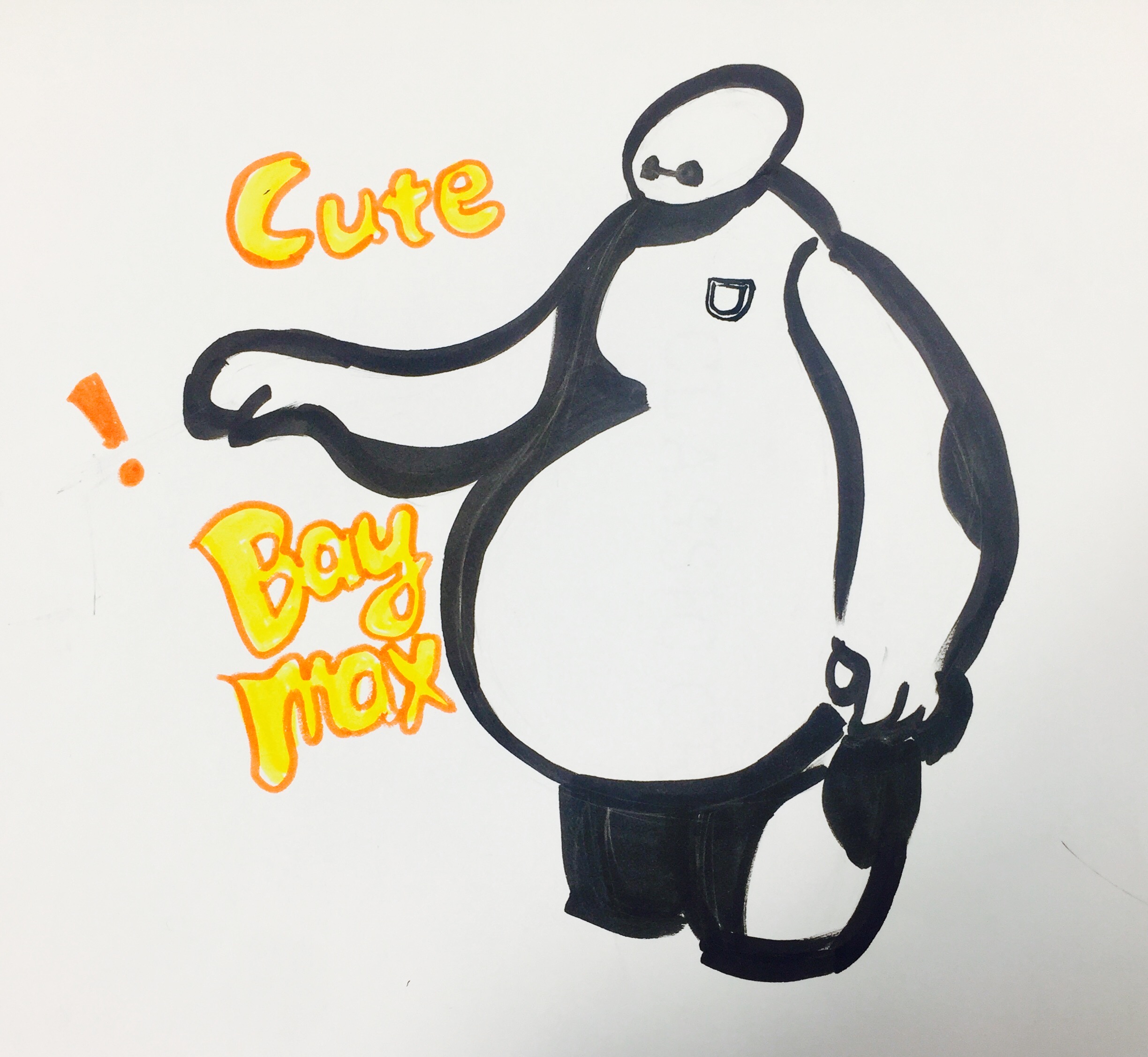
One classic example of avoiding uncanny valley is Disney cartoon movies. Disney has created many lovable cartoon characters like Pinocchio, Cinderella, and Snow White. Looking at these cartoon characters, we donot feel any revulsion, we actually have affinity for them. What’s more, most audiences were crazy about robot characters like Baymax, WALL-E and EVE. Their huge success also proves the importance of applying uncanny valley hypothesis. Because when the appearance of a robot is made more human, obervers’ emotional responses to the robot become increasingly positive and empathetic, until it reaches a point beyond which the response quickly becomes strong revulsion.

However, some people may still have questions. Why do we love those humanlike robots in TV series West World then? This is because the hypothesis also says as the robot’s appearance continues to become less distinguishable from a human being, the emotional response becomes positive once again and approaches human-to-human empathy levels. So the uncanny valley is actually a range between a “barely human” and “fully human” entity.
WechatIMG107

And according to research, reducing consistency in human realism increases the uncanny valley effect. What’s more, this effect was stronger when realism in the eyes, eyelashes, and mouth was low, just like the example in this picture.[2] people in second column have extreme big eyes, which elicit the strongest eerie and revulsion (or uncanniness) feelings in viewers among three columns.

There are a lot of hypotheses to explain the existence of uncanny valley. Some people believe that uncanny valley is the outcome of long-term evolution and is a typical emotional response of stranger avoidance theory. Avoiding unusual individuals is a way to protect ourselves. Humans sense and avoid those who look not normal because they seem unhealthy or might have a hereditary disease. As a result, when an object makes us feel it is neither human nor a typical robots we instinctively have feelings of aversion and fear.

Savannah Park
Park in Savannah

But based on the evidence of other researchers, it seems that realism inconsistency theory is the best way to explain uncanny valley. Because this theory explains cold, eerie feelings elicited by transitions between instances of two different, mutually exclusive categories, given that at least one category is anthropomorphic: Cold, eerie feelings are caused by prediction error from perceiving some features as features of the first category and other features as features of the second category. What’s more, in principle, it can explain not only negative evaluations of transitions between real and computer modeled humans but also between different vertebrate species.[3]
Savannah Local Food
Savannah Local Food

No matter which theory is right, we now understand that our uncomfortable feelings for nonliving things that seem human are a result of the uncanny valley. So if you are frightened by scary creepy doll movies or clown masks in the future, just tell yourself, it is all because of uncanny valley, totally science, no big deal and you will be fine.

Savannah trip
Savannah trip

Work Cited

Ho, Chin-Chang, and Karl F. MacDorman. “Measuring the Uncanny Valley Effect.” International Journal of Social Robotics 9.1 (2017): 129-139.

MacDorman, Karl F., and Debaleena Chattopadhyay. “Reducing consistency in human realism increases the uncanny valley effect; increasing category uncertainty does not.” Cognition 146 (2016): 190-205.

MacDorman, Karl F., and Debaleena Chattopadhyay. “Categorization-based stranger avoidance does not explain the uncanny valley effect.” Cognition 161 (2017): 132-135.

Image

p1,p2, p7, p8, p9 credit by Erting Zhu

https://commons.wikimedia.org/wiki/File:Wpdms_fh_uncanny_valley_3.jpg

https://commons.wikimedia.org/wiki/File:Repliee_Q2.jpg

https://azzai.deviantart.com/art/FRA-LA-LA-LA-LA-494506133

https://www.flickr.com/photos/53554756@N02/6804196816

Edited by professor Jennifer Kraft Leavey

Written by Erting Zhu

Your journey starts here! Let’s talk!

ThemeRex © 2026. All rights reserved.
  Timothy Durham was convicted of rape when a test showed his DNA genotype matched the DNA recovered from the crime scene. Eye witnesses testified that Durham was in a different state at the time of the incident, but he wasn’t exonerated from his 3000 year sentence until follow up DNA analysis showed that the preliminary forensic analysis used in the trial was misinterpreted (Thomas et al.). DNA testing serves an invaluable part in our criminal justice system, but it comes with complications and bias that can lead to wrongful convictions and misinformed juries.  

Background:

Forensic genetics aims to identify the origin of a biological sample. It can be traced back to Karl Landsteiner who discovered human ABO blood groups. With blood groups, suspects could be eliminated based on their blood type. For example, if a suspect had type A blood and there was type B blood left at the scene by the perpetrator, the investigators could rule out the suspect. Unfortunately, the reverse didn’t work. If the suspect and perpetrator both had the same blood type, it can’t be concluded that the suspect was guilty. Blood identifiers evolved into 8 distinct categories which improved the ability to eliminate suspects, but could only conclude that (if the system matched) it might be the perpetrator or this person might be related to the perpetrator (Jobling and Gill). The field evolved in the 1980s with the discovery of Minisatellites, lines of repetitive DNA that don’t encode proteins. Minisatellite patterns in DNA create what we know today as the DNA fingerprint, and it has a much higher accuracy rate than previous methods (Augustyn et al.). Around the same time, a breakthrough for victims of sexual assault was discovered. In the case of assault, bodily fluids of both the victim and the assaulter can get mixed. A process called differential lysis was created which could selectively increase the concentration of sperm in a fluid sample thereby allowing for accurate DNA testing (Jobling and Gill). Forensics evolved to use single-locus probe testing after several years because of its ease of interpretation. It looked at specific minisatellites that had high variability between subjects. This was the first DNA-based method to be used in a criminal investigation. Two murder homicides from several years apart were connected using DNA evidence. The evidence was then used to exonerate an innocent man, and the guilty party was found when he tried to evade mandatory DNA testing for all men in the small town. His guilt was then reinforced when the DNA profiles matched, and he gave a confession (Jobling and Gill). Finding DNA at a crime scene doesn’t guarantee that you’ll find a murderer. There are issues with non-pure samples and limited samples that make DNA work difficult, and accreditation of facilities and new techniques and take time (Jobling and Gill).  

Subjectivity of DNA Interpretation:

In a 2009 publication, the National Academy of Science discusses the possibility for subjective influence in lab based forensics. The interpretation bias happens in complex cases where, for example, there could be a mixture of DNA. A study published in 2011 looked specifically at this issue. A gang rape happened in Georgia, and the mixture in DNA from the case was used to prosecute one suspect after another suspect took a plea bargain to testify against him. With DNA mixtures, there are three possible conclusions: suspect excluded, suspect cannot be excluded, and inconclusive. If the suspect is excluded, it means that there’s little to no possibility that his DNA is part of the sample. If the suspect cannot be excluded, it means that there’s a possibility that his DNA is part of the sample. In the trial, the DNA examiners who knew the context of the case concluded that the suspect being prosecuted could not be excluded. The 2011 study gave the DNA evidence from this case and the DNA profiles of the suspects to 17 forensic examiners. These examiners had no context of the case, and they all worked independently. Of the 17, only 1 came to the same conclusion (suspect cannot be excluded) as the examiners who knew the context of the case. Twelve of the 17 concluded that the suspect who was prosecuted and convicted had no relation to the DNA found in the sample. Not only does this show that subjectivity occurs due to the context of the case, but the 17 examiners came up with different findings based on their past experiences meaning that not all DNA analysis is objective. Some organizations like the Scientific Working Group on DNA Analysis Methods say that quantitative statistical evidence should be presented with every categorical conclusion, but the US doesn’t require this (Dror and Hampikian).

False Positives:

There are two categories that cause wrongful identification in a DNA report: coincidental matches and false positives. Coincidental matches are DNA matches between two unrelated people. The probability of these matches is about 1 to 500,000 for white individuals and about 1 to 350,000 for black individuals. This small probability of coincidental matches makes people feel confident in DNA evidence. False positives, on the other hand, are matches between DNA and test DNA that result from issues in the forensics lab. There have been multiple cases of forensics labs accidentally switching victim and suspected rapist DNA which lead to convictions that were later overturned when the lab realized the error. There are also cases of misreading or misunderstanding a sample. In a case from 1993, a man was convicted of rape because someone interpreted a mixed sample of victim and perpetrator DNA as an individual sample. The conviction was again overturned. To prevent false convictions, retesting DNA is allowed, but it’s not an efficient solution. Many people are pushing for statistical information on the probability of false positives, so that the jurors can make accurate judgements based on DNA evidence (Thomas et al.).  

Conclusion:

DNA analysis is a useful tool for the criminal justice system, but subjectivity can be an issue in forensic testing. To combat wrongful convictions, there are organizations like The Innocence Project who use DNA testing to free the innocent, but reformed forensic testing standards should be put in place to prevent subjectivity and to ensure juries are correctly informed during trials. https://www.innocenceproject.org/    

Citation:

Augustyn , Adam, et al. “DNA Finerprinting.” Encyclopedia Britannica , 26 Apr. 2018, www.britannica.com/science/DNA-fingerprinting#ref153186. Dror, Itiel E., and Greg Hampikian. “Subjectivity and Bias in Forensic DNA Mixture Interpretation.” Science & Justice, vol. 51, no. 4, 2011, pp. 204–208., doi:10.1016/j.scijus.2011.08.004. Jobling, Mark A., and Peter Gill. “Encoded Evidence: DNA in Forensic Analysis.” Nature Reviews: Genetics, vol. 5, no. 10, Oct. 2004, pp. 739–751., doi:10.1038/nrg1455. Thompson, William C, et al. “How the Probability of a False Positive Affects the Value of DNA Evidence.” Journal of Forensic Sciences, vol. 48, no. 1, Jan. 2003, pp. 1–8., doi:10.1520/jfs2001171.