Oscillatory Syntax – The Cognitive Optimizations of Creative Flow in Music

While many would not often not regard music similarly to language, as a communicative form of expression, studying music in a similar fashion to language has ultimately provided some very interesting as well as unique insights into many different psycholingistic, the study of the psychology of language, and cognitive properties that can be associated with the art form. On a more technical and psycholinguistic level, music, as compared to language, can also be broken into multiple distinct syntaxes, or genres in the case of music, each of which carries its own respective sociolinguistic connotations. An example of this is genres such as rap and hip-hop that are generally associated with social commentary. In addition to this, genres also often carry unique and specific syntactical applications with them as well, with genres such as jazz being a great example of this as jazz places a heavier emphasis on the musician’s personal biases through improvisation. With these different and sometimes highly technical psychological applications often unthought of as situated within music,  a large intersection between neurophysiology and music is revealed—and this is an area that is often left largely unexplored by science.

Through understanding how music functions linguistically, we can begin to explore the cognitive states that are triggered by music. Even as an art form, music is a remarkable field for studying human cognition; by applying neurophysiological perspectives to music, such as the intricate coordination of motor skills, cognitive processing, and emotional regulation with the more mathematical structures, such as rhythm, harmony, and melody that ultimately elicit emotional triggers neuroscientists can link the fine arts with with sciences. Through computational modeling, we can begin to uncover how music fosters unique cognitive optimizations found particularly during the creative flow state. A powerful tool for optimizing cognitive function, flow is “a state in which people are so involved in an activity that nothing else seems to matter (Rosen et al., 2024).” Originally identified by psychologist Mihaly Csikszentmihalyi (Dolan, 2024), cognitive flow is a state of highly optimized task-specific processing that is often linked to constant domain-general associative ideation, better known as creativity. Generally, through practice, dedication, and a little bit of passion, musicians of all levels can both demonstrate and experience this state of consciousness to the extent of the linguistic proficiency to which we generally speak. This ability to “let go” and “to operate with minimal conscious oversight” is what makes the flow state an exciting topic for neuroscientists, as this state ultimately functions through the recruitment of highly specialized brain networks that, when modeled computationally, provide valuable insight into high-level cognitive functioning through neurocomputational modeling.

This flow state, when explored through neurocomputational modeling, can provide deeper insight into the brain’s processing of musical structure and creativity. Oftentimes, a major factor of emphasis regarding creative tasks performed in flow states is feedback on one’s novel ideas and creative processes that are often generated through a general understanding and conformation to a rigid set of rules associated with the artform, similar to how speech is dictated by grammar rules. Especially in music, “structure and experience are tightly linked. Therefore, music theory lies at a philosophically and methodologically challenging intersection between psychology and formal modeling because it links human musical experience with the formal/mathematical characterization of the structures underlying it. Hence, music theory lies at the heart of the research program of the Cognative Sciences” (Rohrmeier, 2020). This idea that music is shaped by a “formal grammar” is ultimately what leads to the gerneative approach used throughout modern neurocomputational modeling. 

As neurocomputational models continue to evolve, the potential for deeper insights into how music affects cognition and creativity grows exponentially, opening up new avenues for both science and art; and through exploring unique cognitive states such as flow states, neuroscientific, mathematical, and physical representaions of the brain can be created through more artistic applications to ultimately push and explore the boundaries of neurocomputational models.


References

Dolan, E. W. (2024, March 6). Scientists team up with jazz musicians to reveal the neuroscience of creative flow. https://www.psypost.org/scientists-team-up-with-jazz-musicians-to-reveal-the-neuroscience-of-creative-flow/ 

Rohrmeier, M. (2020, April 1). The syntax of jazz harmony: Diatonic tonality, phrase structure, and form. The Syntax of Jazz Harmony: Diatonic Tonality, Phrase Structure, and Form. https://www.ingentaconnect.com/content/leuven/mta/2020/00000007/00000001/art00001;jsessionid=1h40lgnaq0nqe.x-ic-live-03# 

Rosen, D., Oh, Y., Chesebrough, C., Zhang, F. Z., & Kounios, J. (2024). Creative flow as optimized processing: Evidence from brain oscillations during jazz improvisations by expert and non-expert musicians. Neuropsychologia, 196, 108824.

Your journey starts here! Let’s talk!

ThemeRex © 2026. All rights reserved.
  Timothy Durham was convicted of rape when a test showed his DNA genotype matched the DNA recovered from the crime scene. Eye witnesses testified that Durham was in a different state at the time of the incident, but he wasn’t exonerated from his 3000 year sentence until follow up DNA analysis showed that the preliminary forensic analysis used in the trial was misinterpreted (Thomas et al.). DNA testing serves an invaluable part in our criminal justice system, but it comes with complications and bias that can lead to wrongful convictions and misinformed juries.  

Background:

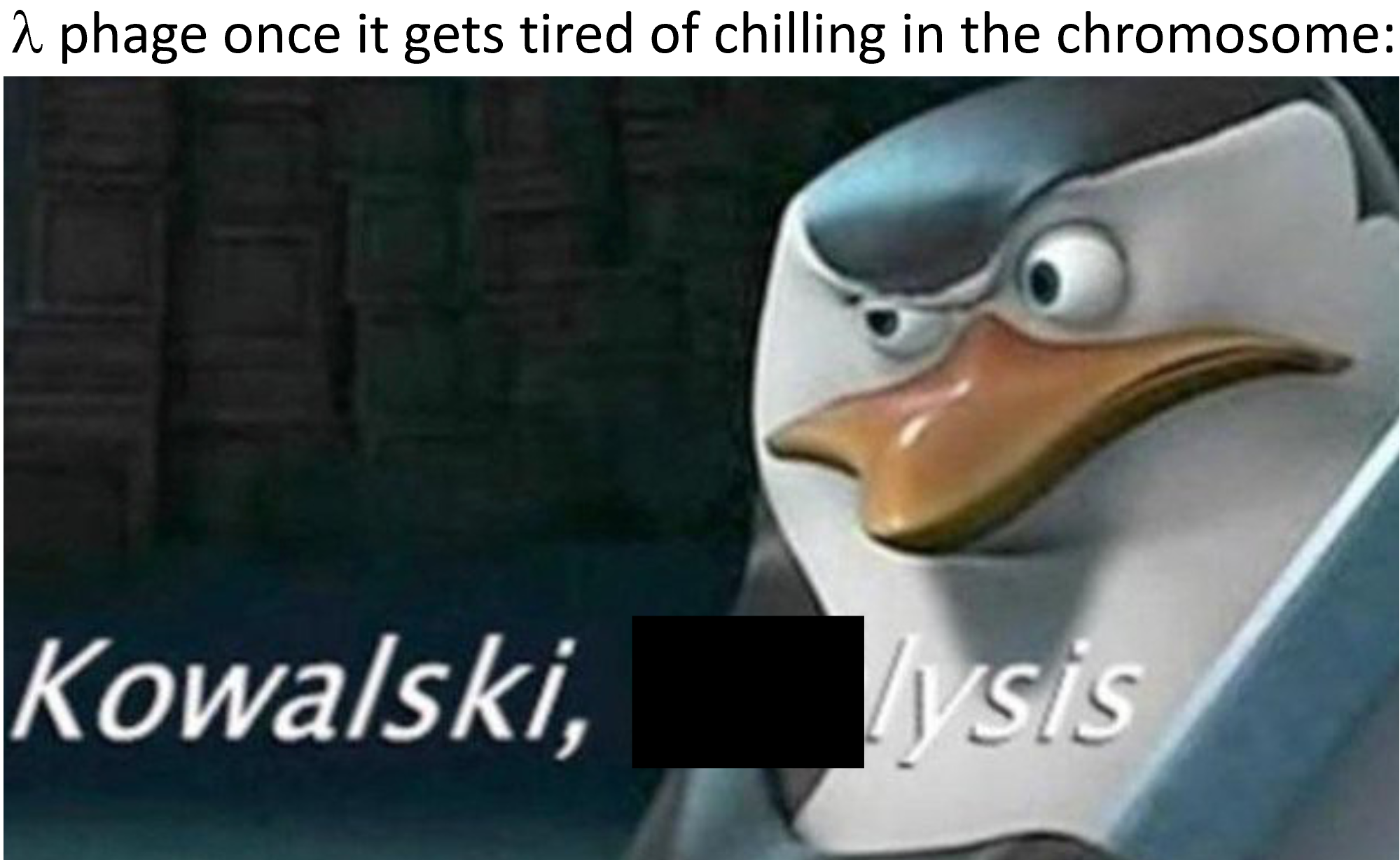
Forensic genetics aims to identify the origin of a biological sample. It can be traced back to Karl Landsteiner who discovered human ABO blood groups. With blood groups, suspects could be eliminated based on their blood type. For example, if a suspect had type A blood and there was type B blood left at the scene by the perpetrator, the investigators could rule out the suspect. Unfortunately, the reverse didn’t work. If the suspect and perpetrator both had the same blood type, it can’t be concluded that the suspect was guilty. Blood identifiers evolved into 8 distinct categories which improved the ability to eliminate suspects, but could only conclude that (if the system matched) it might be the perpetrator or this person might be related to the perpetrator (Jobling and Gill). The field evolved in the 1980s with the discovery of Minisatellites, lines of repetitive DNA that don’t encode proteins. Minisatellite patterns in DNA create what we know today as the DNA fingerprint, and it has a much higher accuracy rate than previous methods (Augustyn et al.). Around the same time, a breakthrough for victims of sexual assault was discovered. In the case of assault, bodily fluids of both the victim and the assaulter can get mixed. A process called differential lysis was created which could selectively increase the concentration of sperm in a fluid sample thereby allowing for accurate DNA testing (Jobling and Gill). Forensics evolved to use single-locus probe testing after several years because of its ease of interpretation. It looked at specific minisatellites that had high variability between subjects. This was the first DNA-based method to be used in a criminal investigation. Two murder homicides from several years apart were connected using DNA evidence. The evidence was then used to exonerate an innocent man, and the guilty party was found when he tried to evade mandatory DNA testing for all men in the small town. His guilt was then reinforced when the DNA profiles matched, and he gave a confession (Jobling and Gill). Finding DNA at a crime scene doesn’t guarantee that you’ll find a murderer. There are issues with non-pure samples and limited samples that make DNA work difficult, and accreditation of facilities and new techniques and take time (Jobling and Gill).  

Subjectivity of DNA Interpretation:

In a 2009 publication, the National Academy of Science discusses the possibility for subjective influence in lab based forensics. The interpretation bias happens in complex cases where, for example, there could be a mixture of DNA. A study published in 2011 looked specifically at this issue. A gang rape happened in Georgia, and the mixture in DNA from the case was used to prosecute one suspect after another suspect took a plea bargain to testify against him. With DNA mixtures, there are three possible conclusions: suspect excluded, suspect cannot be excluded, and inconclusive. If the suspect is excluded, it means that there’s little to no possibility that his DNA is part of the sample. If the suspect cannot be excluded, it means that there’s a possibility that his DNA is part of the sample. In the trial, the DNA examiners who knew the context of the case concluded that the suspect being prosecuted could not be excluded. The 2011 study gave the DNA evidence from this case and the DNA profiles of the suspects to 17 forensic examiners. These examiners had no context of the case, and they all worked independently. Of the 17, only 1 came to the same conclusion (suspect cannot be excluded) as the examiners who knew the context of the case. Twelve of the 17 concluded that the suspect who was prosecuted and convicted had no relation to the DNA found in the sample. Not only does this show that subjectivity occurs due to the context of the case, but the 17 examiners came up with different findings based on their past experiences meaning that not all DNA analysis is objective. Some organizations like the Scientific Working Group on DNA Analysis Methods say that quantitative statistical evidence should be presented with every categorical conclusion, but the US doesn’t require this (Dror and Hampikian).

False Positives:

There are two categories that cause wrongful identification in a DNA report: coincidental matches and false positives. Coincidental matches are DNA matches between two unrelated people. The probability of these matches is about 1 to 500,000 for white individuals and about 1 to 350,000 for black individuals. This small probability of coincidental matches makes people feel confident in DNA evidence. False positives, on the other hand, are matches between DNA and test DNA that result from issues in the forensics lab. There have been multiple cases of forensics labs accidentally switching victim and suspected rapist DNA which lead to convictions that were later overturned when the lab realized the error. There are also cases of misreading or misunderstanding a sample. In a case from 1993, a man was convicted of rape because someone interpreted a mixed sample of victim and perpetrator DNA as an individual sample. The conviction was again overturned. To prevent false convictions, retesting DNA is allowed, but it’s not an efficient solution. Many people are pushing for statistical information on the probability of false positives, so that the jurors can make accurate judgements based on DNA evidence (Thomas et al.).  

Conclusion:

DNA analysis is a useful tool for the criminal justice system, but subjectivity can be an issue in forensic testing. To combat wrongful convictions, there are organizations like The Innocence Project who use DNA testing to free the innocent, but reformed forensic testing standards should be put in place to prevent subjectivity and to ensure juries are correctly informed during trials. https://www.innocenceproject.org/    

Citation:

Augustyn , Adam, et al. “DNA Finerprinting.” Encyclopedia Britannica , 26 Apr. 2018, www.britannica.com/science/DNA-fingerprinting#ref153186. Dror, Itiel E., and Greg Hampikian. “Subjectivity and Bias in Forensic DNA Mixture Interpretation.” Science & Justice, vol. 51, no. 4, 2011, pp. 204–208., doi:10.1016/j.scijus.2011.08.004. Jobling, Mark A., and Peter Gill. “Encoded Evidence: DNA in Forensic Analysis.” Nature Reviews: Genetics, vol. 5, no. 10, Oct. 2004, pp. 739–751., doi:10.1038/nrg1455. Thompson, William C, et al. “How the Probability of a False Positive Affects the Value of DNA Evidence.” Journal of Forensic Sciences, vol. 48, no. 1, Jan. 2003, pp. 1–8., doi:10.1520/jfs2001171.