TAKE THE QUIZ HERE: https://www.tryinteract.com/share/quiz/5f7fc0088a3cf300140577ed
Neuroscience is an ancient subject, but a very young science.
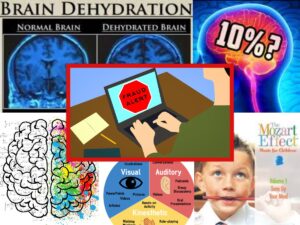
What I mean by that is, while people have been fascinated with the concepts relating to the mind and consciousness for as long as we have recorded records, the scientific, empirically supported study of the nervous system is a relatively new field. Our innate curiosity to understand ourselves and how we interact with the world, paired with the relative lack of scientific literature, might be one of the reasons there are so many false beliefs about the brain and nervous system in mainstream culture.
In fact, public misconceptions about neuroscience are such a common phenomenon that we have a specific word for them: neuromyths. This term was coined by neurosurgeon Alan Crockard in the 1980s as a way to describe widespread but unscientific beliefs about the brain in the medical community and was formally re-defined as a “misconception generated by a misunderstanding, a misreading or a misquoting of facts scientifically established (by brain research) to make a case for use of brain research in education and other contexts” by the Brain and Learning project section of the UK’s Organization of Economic Co-operation and Development (OECD) in 2002.
People have been noticing this trend, however, and have tried to explain where neuromyths come from, and why they are so convincing to so many. They have noted that these false notions persist in a strange manner, similar to the way that illusions can continue to seem real even after facts have been presented (Pasquinelli, 2012), or the way that urban legends are resilient and appealing regardless of the presence or lack of evidence (Brunvald, 1981). Neuromyths are often vaguely rooted in some true research, albeit research that is largely misinterpreted, overblown, or entirely overturned by the academic community. This, along with inaccurate or sensationalist reporting of neuroscience discoveries in popular media, may be what gives them such an air of credibility, and why they are as potent as they are.
Some of these ideas seem intuitive. Others, like the popular commercialized Brain Gym regimen which purports that rubbing areas of tissue around the sternum (called “brain buttons”) can help improve interhemispheric communication among other things, sound less feasible from the start (Hyatt, 2007). As quirky, benign, or even downright ridiculous as neuromyths can seem though, they are not harmless. For every well-intentioned dollar and minute spent implementing policies based on pseudoscience, there are fewer resources left to give to evidence-based scientific principles. Like any opportunity-cost model, neuromyths “cost” a lot in terms of what we “could” be teaching and applying about the brain.” They also “cost” us in terms of public receptiveness and curiosity for new research. By simplifying complex topics and claiming knowledge we don’t actually have, neuromyths can give the impression that certain ideas are already “solved problems”, when they are still questions we should be actively pursuing. In addition, when neuromyths are disproven, they may make people less trusting of true results from studies, since the previous “science” they heard wasn’t right. It lends substance to the notion that scientists are constantly “flip-flopping” on topics, hastily publishing results and then issuing retractions left and right, although the original claims were never made by scientists in the first place. Allowing neuromyths to pass unchecked as truth undermines the credibility of neuroscience, and ultimately science as a whole, by propagating ill-informed ideas with the authority that the disguise of a “lab coat” gives the public.
Given this context, it’s time to start challenging the beliefs we hold and start to critically differentiate between the “urban legends” of neuroscience and data-supported hypotheses. Try your hand at this quiz to see how well you know what is and is not true about the human brain and nervous system!
TAKE THE QUIZ HERE: https://www.tryinteract.com/share/quiz/5f7fc0088a3cf300140577ed
References:
Bangarter, A., & Heath, C. (2004). The Mozart effect: Tracking the evolution of a scientific legend. British Journal of Social Psychology, 43, 605– 623.
Boyd, R. (2008, February 07). Do People Only Use 10 Percent of Their Brains? Retrieved October 24, 2020, from https://www.scientificamerican.com/article/do-people-only-use-10-percent-of-their-brains/
Craik, F. I., & Lockhart, R. S. (1972). Levels of processing: A framework for memory research3. Journal of Verbal Learning and Verbal Behavior, 11(6), 671-684. doi:10.1016/s0022-5371(72)80001-x
Craik, F. I. M. & Tulving, E. (1975). Depth of processing and the retention of words in episodic memory. Journal of Experimental Psychology, 104(3), 268-294.
Crockard, A. Confessions of a brain surgeon. New Scientist 2061, 68 (1996).
Giuffre BA, Jeanmonod R. Anatomy, Sciatic Nerve. [Updated 2020 Jul 31]. In: StatPearls [Internet]. Treasure Island (FL): StatPearls Publishing; 2020 Jan-. Available from: https://www.ncbi.nlm.nih.gov/books/NBK482431/
Draganski, B., & May, A. (2008). Training-induced structural changes in the adult human brain. Behavioural Brain Research, 192(1), 137-142. doi:https://doi.org/10.1016/j.bbr.2008.02.015
Driemeyer J, Boyke J, Gaser C, Büchel C, May A (2008) Changes in Gray Matter Induced by Learning—Revisited. PLOS ONE 3(7): e2669. https://doi.org/10.1371/journal.pone.0002669
Howard-Jones, P. Neuro, science and education: myths and messages. Nat Rev Neurosci 15, 817–824 (2014). https://doi.org/10.1038/nrn3817
Hyatt, K. J. Brain Gym: building stronger brains or wishful thinking? Remedial Spec. Educ. 28, 117–124 (2007).
Koch, C. (2016, January 01). Does Brain Size Matter? Retrieved October 16, 2020, from https://www.scientificamerican.com/article/does-brain-size-matter1/
Lodish H, Berk A, Zipursky SL, et al. Molecular Cell Biology. 4th edition. New York: W. H. Freeman; 2000. Section 21.1, Overview of Neuron Structure and Function. Available from: https://www.ncbi.nlm.nih.gov/books/NBK21535/
Macdonald, K., Germine, L., Anderson, A., Christodoulou, J., & McGrath, L. M. (2017). Dispelling the Myth: Training in Education or Neuroscience Decreases but Does Not Eliminate Beliefs in Neuromyths. Frontiers in Psychology, 8(1314). doi:10.3389/fpsyg.2017.01314
Organisation for Economic Co-operation and Development. Understanding the Brain: Towards a New Learning Science. (OECD Publications, 2002).
Pashler, H., McDaniel, M., Rohrer, D., and Bjork, R. (2008). Learning styles concepts and evidence. Psychol. Sci. Public Interest 9, 105–119. doi: 10.1111/j.1539-6053.2009.01038.x
Pasquinelli, E. (2012), Neuromyths: Why Do They Exist and Persist?. Mind, Brain, and Education, 6: 89-96. doi:10.1111/j.1751-228X.2012.01141.x
Nielsen, J. A., Zielinski, B. A., Ferguson, M. A., Lainhart, J. E., & Anderson, J. S. (2013). An evaluation of the left-brain vs. right-brain hypothesis with resting state functional connectivity magnetic resonance imaging. PloS one, 8(8), e71275.
Rauscher, F., Shaw, G. & Ky, C. Music and spatial task performance. Nature 365, 611 (1993). https://doi.org/10.1038/365611a0
Riener, C., and Willingham, D. (2010). The myth of learning styles. Change 42, 32–35. doi: 10.1080/00091383.2010.503139
Ruigrok, A. N., Salimi-Khorshidi, G., Lai, M. C., Baron-Cohen, S., Lombardo, M. V., Tait, R. J., & Suckling, J. (2014). A meta-analysis of sex differences in human brain structure. Neuroscience and biobehavioral reviews, 39(100), 34–50. https://doi.org/10.1016/j.neubiorev.2013.12.004
Treiman, R., Gordon, J., Boada, R., Peterson, R. L., and Pennington, B. F. (2014). Statistical learning, letter reversals, and reading. Sci. Stud. Reading 18, 383–394. doi: 10.1080/10888438.2013.873937
Vellutino, F. R. (1979). Dyslexia: Theory and Research. Cambridge, MA: MIT Press.
Wickelgren, W. (1981). Human learning and memory. Annu. Rev. Psychol. 32, 21–52. doi: 10.1146/annurev.ps.32.020181.000321
Willingham, D. T., Hughes, E. M., and Dobolyi, D. G. (2015). The scientific status of learning styles theories. Teach. Psychol. 42, 266–271. doi: 10.1177/0098628315589505/;=
Wittbrodt MT, Millard-Stafford M. Dehydration Impairs Cognitive Performance: A Meta-analysis. Med Sci Sports Exerc. 2018 Nov;50(11):2360-2368. doi: 10.1249/MSS.0000000000001682. PMID: 29933347.