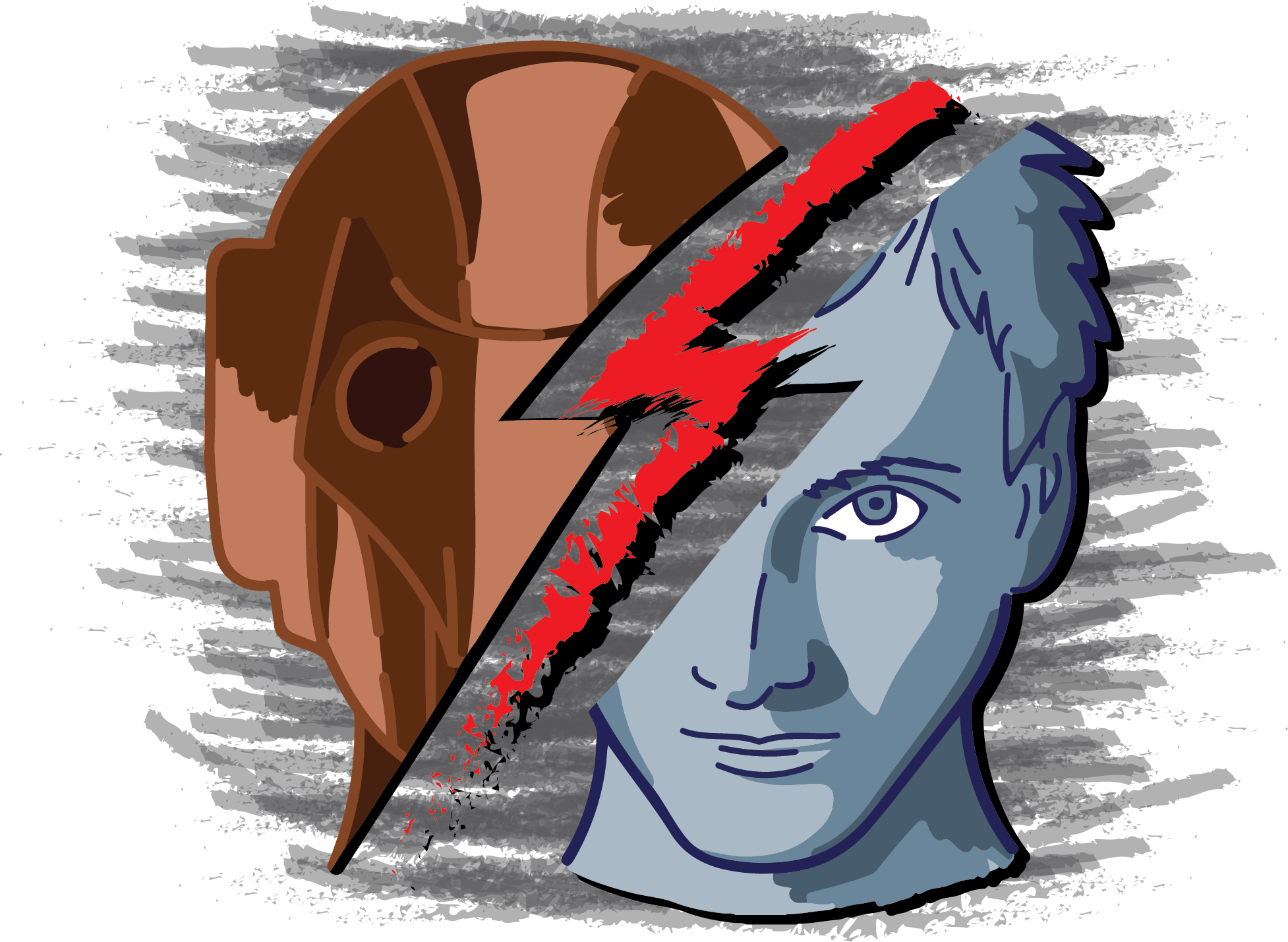
Meat vs Metal

A comparison of the human brain and modern computer!
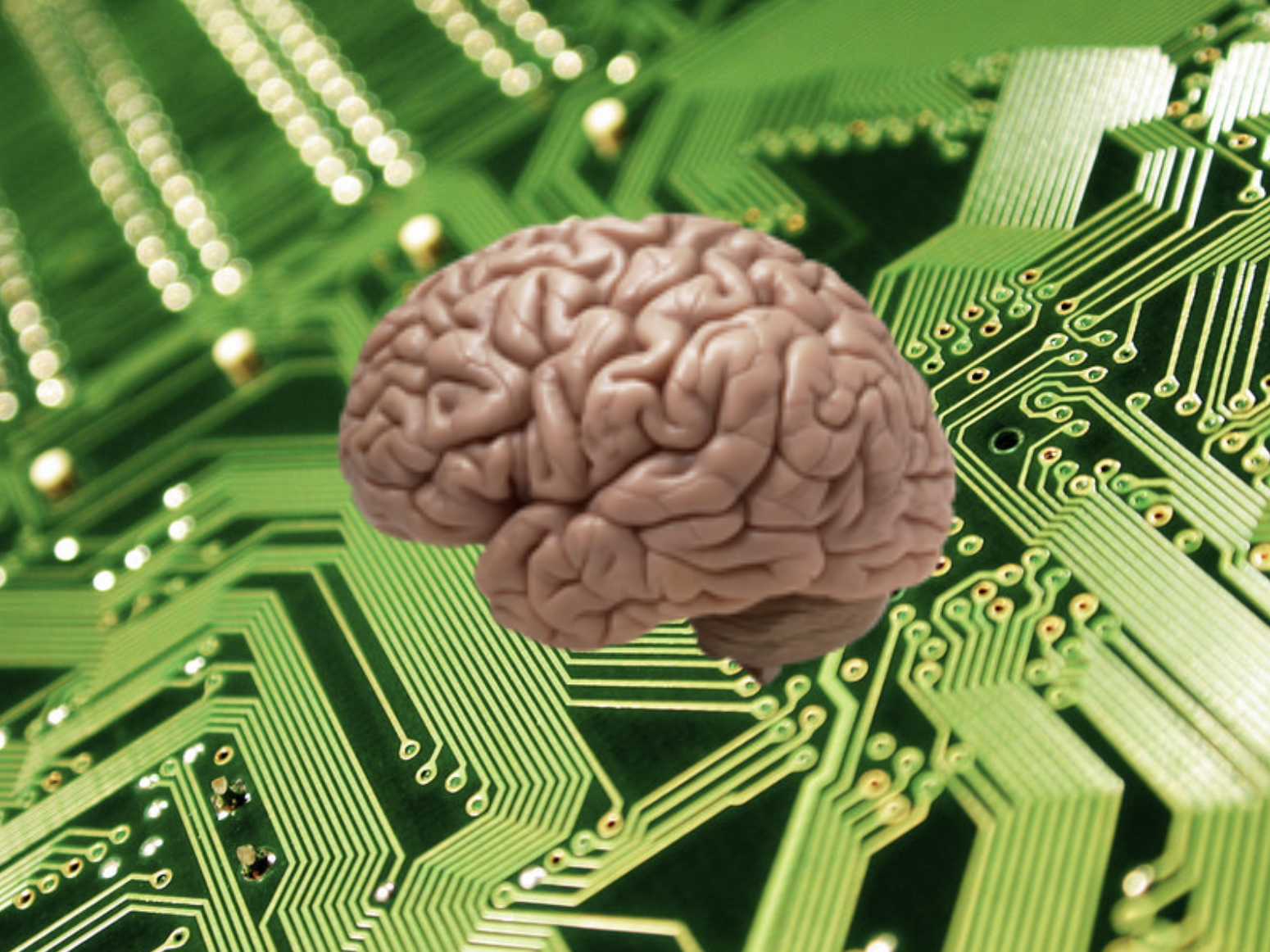
How are the human brain and a computer similar?

Function:

The human brain and a computer are both devices for processing information, making decisions, completing tasks, and solving problems. They are also both comprised of many unique components, each with their own responsibility.

Component comparisons:

First, let us loosely define some computer parts:

  • CPU: (Central Processing Unit) sends and receives data and instructions
  • Hard Drive: information storage, management, and organization
  • RAM: (Random-Access Memory) short term memory, only stored while in use
  • GPU: (Graphics Processing Unit) creation of images / rendering graphics from given information
  • Input / Output devices: keyboard, mouse, camera, monitor, microphone, speaker, etc.

Now, we will loosely define some parts of the human brain:

  • Thalamus: takes sensory input and distributes it to the proper areas of the brain, “relay station”
  • Hypothalamus: temperature regulation (among many other functions)
  • Hippocampus: short term memory storage
  • Visual cortex: located in the occipital lobe, processes visual input in the form of electrical impulses

It is not ideal to compare many of these parts due to the differences in their makeup/ability. Even so, in order to gain a better understanding, we will make some loose comparisons between them below:

FunctionBrain componentComputer component
General processing (both sending and receiving instructions)ThalamusCPU (Central Processing Unit)
Short term memoryHippocampus RAM (Random-Access Memory)
Long term memoryFrontal lobe, temporal lobeHard drive
Visual input processing/ rendering visual information Visual cortex (input from eyes)Camera (input) & GPU (processing)
Temperature regulation hypothalamusInternal fans 
Maintaining function/powerBrain stemPower cord/battery
input/outputSensory organsKeyboard, mouse, camera, microphone, speakers

How do they differ?

Composition & Communication:

There are some very fundamental differences between the brain and the computer. For instance, the brain consists of neurons and synapses that use and transmit information in the form of electrical and chemical impulses. However, we know that the brain largely differs from this, as it consists of transistors, diodes, capacitors, and all kinds of mechanical hardware that transmit information in the form of bits (binary).

It is important to recognize the distinction between computer memory and human memory. When we look at a computer memory, we see RAM and a hard drive in most cases. These are just, in simplistic terms, temporary (short-term) and permanent (long-term) memory storage that consists of information (saved data, files, images/videos, etc.) that is largely simplistic and mechanical in nature. However, if we take a look at the human brain, we see that memory consists of much more than just short-term and long-term memory.

Modern neuroscience has discovered that we have:

  • “Spatial memory”: a mental map of space – this is why you can walk around familiar places with your eyes closed!
  • “Episodic memory”: playing a scene/experience back in your head
  • “Emotional memory”: stored in the amygdala – instinctual emotional reactions based on past experiences
  • “Procedural memory”: stored in the motor cortex – muscle memory
  • “Semantic memory”: stored in the frontal/temporal lobes – general knowledge and long-term memories from the hippocampus

There is also a distinct difference in how computers and humans learn. Computers use “distributive learning” which is essentially learning from information residing in memory. Humans use “heuristic learning” which means that they learn from experience.

Overall, brains and computers differ in many ways. A computer may be better at one task that the brain is less suited for, and vice versa. Below we will explore some of the benefits of each in different scenarios.

Where do computers excel?:

Computers are capable of learning, processing, and working without risk of exhaustion (given they are connected to a proper power source). They also do not encounter many common roadblocks that humans do, such as illness, burnout and other prohibitors of function.

Computers have permanent, reliable memory that remains unchanged unless deleted. Computer hard drives can be upgraded and made to have more storage, given appropriate technological advances. Memory on a hard drive can also be physically transferred from one computer to another.

Computers have incredibly high processing speeds/power compared to a human brain. This means that they can complete “objective tasks” (repetitive checks, multiple choice, structured problems) very quickly and efficiently.

Where do human brains excel?:

The human brain is a marvelous organic creation that to this day has not been able to fully comprehend itself. It is 10 times more energy efficient compared to modern technology. A human brain is comprised of 10 billion neurons that communicate via electrical impulse and somehow it only uses 10 watts! The brain also is comprised of many different parts which are all interconnected and run parallel to each other to achieve processing, problem solving, etc. It is also inherently

At its base level, with no additions, the brain can process sound, sight, smell, touch, and taste. A computer requires additional parts such as sensors and processors in order to achieve similar ability. The human brain is also one that can process emotions and energy(“vibes”), which are essential for understanding certain situations.

Lastly, the brain is able to heal itself. Let’s say a person has a head injury. They are likely to heal and regain most, if not all, of their previous cognitive function if the injury was not too severe. On the other hand, let’s say a computer is “injured” in a similar fashion. If the computer hardware is damaged, it must be repaired or replaced. A computer cannot heal itself, and therefore the brain has an advantage here.

Conclusion & Citations

One can’t truly say that brains or computers are superior to one another. Their individual strengths and weaknesses must be highlighted in order to properly compare them! Overall, I think the question should not be “Which is better?” but instead, we should ask “How can they work together to be the most efficient?”.

Sources:

Your journey starts here! Let’s talk!

ThemeRex © 2026. All rights reserved.
  Timothy Durham was convicted of rape when a test showed his DNA genotype matched the DNA recovered from the crime scene. Eye witnesses testified that Durham was in a different state at the time of the incident, but he wasn’t exonerated from his 3000 year sentence until follow up DNA analysis showed that the preliminary forensic analysis used in the trial was misinterpreted (Thomas et al.). DNA testing serves an invaluable part in our criminal justice system, but it comes with complications and bias that can lead to wrongful convictions and misinformed juries.  

Background:

Forensic genetics aims to identify the origin of a biological sample. It can be traced back to Karl Landsteiner who discovered human ABO blood groups. With blood groups, suspects could be eliminated based on their blood type. For example, if a suspect had type A blood and there was type B blood left at the scene by the perpetrator, the investigators could rule out the suspect. Unfortunately, the reverse didn’t work. If the suspect and perpetrator both had the same blood type, it can’t be concluded that the suspect was guilty. Blood identifiers evolved into 8 distinct categories which improved the ability to eliminate suspects, but could only conclude that (if the system matched) it might be the perpetrator or this person might be related to the perpetrator (Jobling and Gill). The field evolved in the 1980s with the discovery of Minisatellites, lines of repetitive DNA that don’t encode proteins. Minisatellite patterns in DNA create what we know today as the DNA fingerprint, and it has a much higher accuracy rate than previous methods (Augustyn et al.). Around the same time, a breakthrough for victims of sexual assault was discovered. In the case of assault, bodily fluids of both the victim and the assaulter can get mixed. A process called differential lysis was created which could selectively increase the concentration of sperm in a fluid sample thereby allowing for accurate DNA testing (Jobling and Gill). Forensics evolved to use single-locus probe testing after several years because of its ease of interpretation. It looked at specific minisatellites that had high variability between subjects. This was the first DNA-based method to be used in a criminal investigation. Two murder homicides from several years apart were connected using DNA evidence. The evidence was then used to exonerate an innocent man, and the guilty party was found when he tried to evade mandatory DNA testing for all men in the small town. His guilt was then reinforced when the DNA profiles matched, and he gave a confession (Jobling and Gill). Finding DNA at a crime scene doesn’t guarantee that you’ll find a murderer. There are issues with non-pure samples and limited samples that make DNA work difficult, and accreditation of facilities and new techniques and take time (Jobling and Gill).  

Subjectivity of DNA Interpretation:

In a 2009 publication, the National Academy of Science discusses the possibility for subjective influence in lab based forensics. The interpretation bias happens in complex cases where, for example, there could be a mixture of DNA. A study published in 2011 looked specifically at this issue. A gang rape happened in Georgia, and the mixture in DNA from the case was used to prosecute one suspect after another suspect took a plea bargain to testify against him. With DNA mixtures, there are three possible conclusions: suspect excluded, suspect cannot be excluded, and inconclusive. If the suspect is excluded, it means that there’s little to no possibility that his DNA is part of the sample. If the suspect cannot be excluded, it means that there’s a possibility that his DNA is part of the sample. In the trial, the DNA examiners who knew the context of the case concluded that the suspect being prosecuted could not be excluded. The 2011 study gave the DNA evidence from this case and the DNA profiles of the suspects to 17 forensic examiners. These examiners had no context of the case, and they all worked independently. Of the 17, only 1 came to the same conclusion (suspect cannot be excluded) as the examiners who knew the context of the case. Twelve of the 17 concluded that the suspect who was prosecuted and convicted had no relation to the DNA found in the sample. Not only does this show that subjectivity occurs due to the context of the case, but the 17 examiners came up with different findings based on their past experiences meaning that not all DNA analysis is objective. Some organizations like the Scientific Working Group on DNA Analysis Methods say that quantitative statistical evidence should be presented with every categorical conclusion, but the US doesn’t require this (Dror and Hampikian).

False Positives:

There are two categories that cause wrongful identification in a DNA report: coincidental matches and false positives. Coincidental matches are DNA matches between two unrelated people. The probability of these matches is about 1 to 500,000 for white individuals and about 1 to 350,000 for black individuals. This small probability of coincidental matches makes people feel confident in DNA evidence. False positives, on the other hand, are matches between DNA and test DNA that result from issues in the forensics lab. There have been multiple cases of forensics labs accidentally switching victim and suspected rapist DNA which lead to convictions that were later overturned when the lab realized the error. There are also cases of misreading or misunderstanding a sample. In a case from 1993, a man was convicted of rape because someone interpreted a mixed sample of victim and perpetrator DNA as an individual sample. The conviction was again overturned. To prevent false convictions, retesting DNA is allowed, but it’s not an efficient solution. Many people are pushing for statistical information on the probability of false positives, so that the jurors can make accurate judgements based on DNA evidence (Thomas et al.).  

Conclusion:

DNA analysis is a useful tool for the criminal justice system, but subjectivity can be an issue in forensic testing. To combat wrongful convictions, there are organizations like The Innocence Project who use DNA testing to free the innocent, but reformed forensic testing standards should be put in place to prevent subjectivity and to ensure juries are correctly informed during trials. https://www.innocenceproject.org/    

Citation:

Augustyn , Adam, et al. “DNA Finerprinting.” Encyclopedia Britannica , 26 Apr. 2018, www.britannica.com/science/DNA-fingerprinting#ref153186. Dror, Itiel E., and Greg Hampikian. “Subjectivity and Bias in Forensic DNA Mixture Interpretation.” Science & Justice, vol. 51, no. 4, 2011, pp. 204–208., doi:10.1016/j.scijus.2011.08.004. Jobling, Mark A., and Peter Gill. “Encoded Evidence: DNA in Forensic Analysis.” Nature Reviews: Genetics, vol. 5, no. 10, Oct. 2004, pp. 739–751., doi:10.1038/nrg1455. Thompson, William C, et al. “How the Probability of a False Positive Affects the Value of DNA Evidence.” Journal of Forensic Sciences, vol. 48, no. 1, Jan. 2003, pp. 1–8., doi:10.1520/jfs2001171.