

Adaptation of Tokyo Japan during daytime photo – Free Person Image on Unsplash
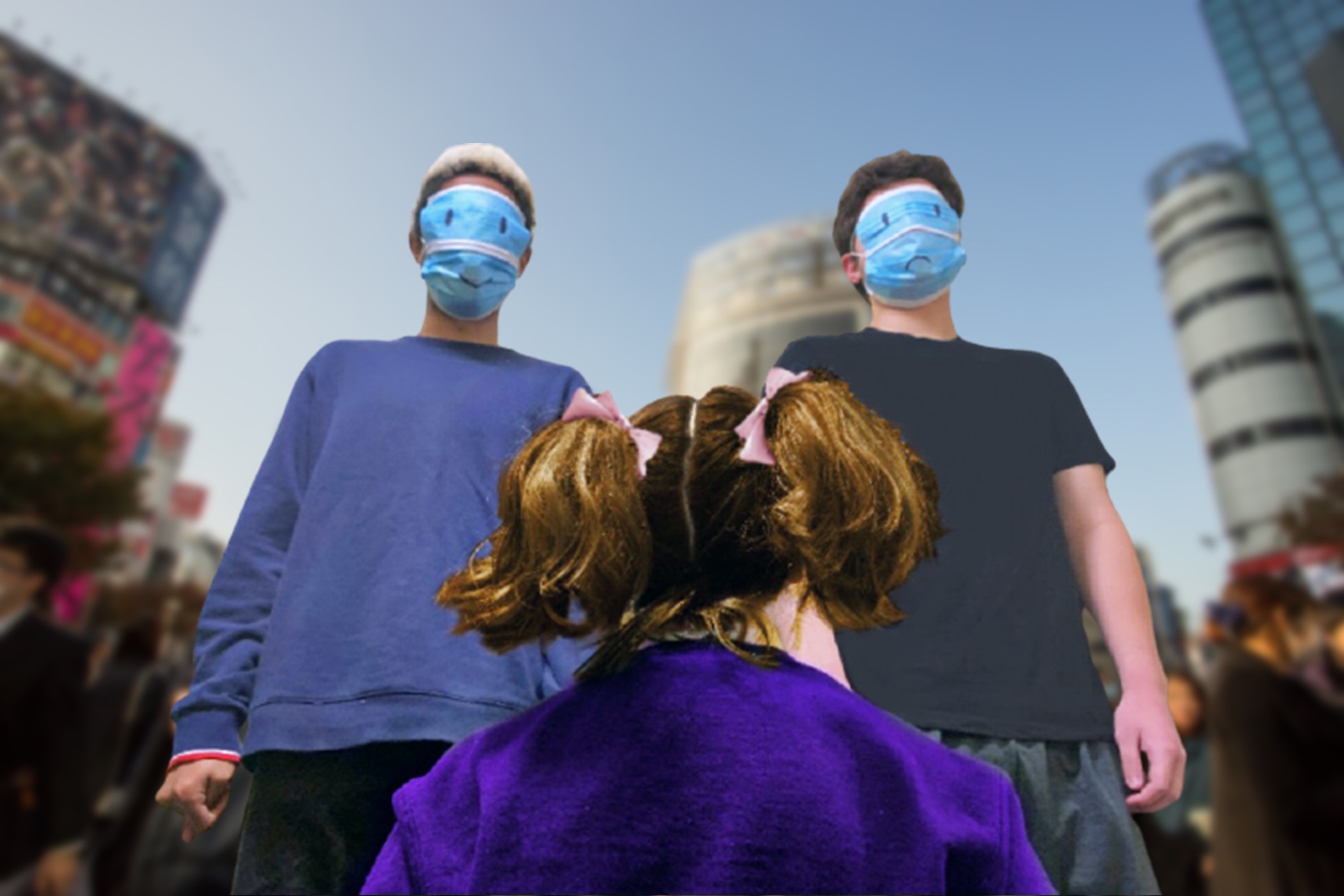
Well, I can’t tell and neither can the children growing up in the covid-19 pandemic struggling to develop their social and emotional intelligence.
At the beginning of 2020, The Year of the Pandemic, the novel coronavirus was announced. A series of lockdowns and safety protocols were put in place. Schools were closed down, businesses went under, and the eerie shadow of death dawned over the entire globe.
Just as a brief overview, the covid-19 disease is caused by a new coronavirus that had yet to be seen in humans until the beginning of 2020. Typically, those afflicted with the disease experience dry coughs, fevers, etc. and in older individuals or those with underlying conditions may have more severe reactions. There are also many individuals considered to be asymptomatic, meaning they do not exhibit any symptoms and most of the time do not even realize they were ever infected. With that being said, roughly 1 in 6 people who do get infected become seriously ill and may have difficulty breathing which could potentially result in death (WHO Team, 2020).
In addition to the explicit and devastating outcomes that have affected everyone, covid-19 is also causing implicit effects that may be going unnoticed. Some of these effects may not even be seen until later on, once this pandemic has passed. One example of this is the negative psychological impacts that it may be having on children. Kids growing up in this age of isolation and death could be experiencing serious psychological tolls. They are at the prime age of development as they are learning languages, gaining a sense of self, and being introduced to independence (Pelz, n.d.)
It is possible that children’s emotional-facial recognition could not be developing properly, they are experiencing great amounts of stress, and they are missing out on key milestones in their lives. This could all lead to great psychological disparities in the future that many may not be anticipating.
Break in Routine
With the break in routine that many children experienced at the beginning of covid comes many unknown consequences. Activities like waking up, getting ready, going to school, lunchtime, playtime, cleanup, group circles, etc. are all part of a child’s routine and losing this structure could have psychological side effects (The Importance of Schedules and Routines, 2020).
For one, suddenly being ripped away from this routine (or having never even been introduced to a routine) leads children feeling they have no control of their environment. This also comes with inevitable confusion as many were not able to grasp the entirety of the situation the world was facing (CDC, 2020).
These children have lost a sense of security and safety. For many families, household incomes were lost along with many jobs. This leads to an inconsistency for children in their access to healthy food, safe transportation, or even shelter (CDC, 2020). In addition, this had a great toll on the parents themselves as they experienced great economic and social stresses. This can be confusing and have adverse impacts on the children as those are the individuals that they look up to and rely on for guidance.
For many children, there was also a great break in their continuity of care and learning. Whether they were taken out of preschool or daycare, or were taken out of an elementary level education system, they were suddenly taken away from their daily routines and friends and became socially isolated. This led to increased stress for both parents and children once again (Araújo et al., 2020). This social isolation also leads to lack of communication with other children which can be a key factor in the psychological development of children. Building positive interactions with peers play a role in facilitating feelings of belonging and confidence as well as the ability to exercise control over the outside environment as previously mentioned (Kington et al., 2013).
FACE-ing Many Problems
Although most children have not lost complete interaction with the outside world due to this pandemic, those that do get the chance to go out are met with emotionless faces covered in cloth. Due to the mandates requiring face masks, it is possible that children are not properly developing their facial-emotional recognition.
This psychology term refers to how people generally “infer the emotional states of other people, such as joy, sadness, and anger, using facial expressions,” (Ko, 2018). The reason the development of such a key psychological component could be obstructed within children specifically is because this is a process that develops early in life. It emerges around 7 months of life but its improvement and maturation continues developing until around the age of 14 in line with the frontal cortical maturation (Malsert et al., 2020).
More specifically, the recognition of these emotions can vary and do not all develop at once. Happiness seems to be the first to develop with children at ages of 5 and 6 are able to accurately evaluate it at the same level as adults. Then comes fear with adult levels emerging at age 7, anger 2 years after, and disgust 4 year after. Additionally, children below the age of 9 were not able to accurately identify neutral facial expressions as they would typically label them as happy or sad (Durand et al., 2007).
Furthermore, the ability for an infant to develop facial processing or focusing on another’s face is being obstructed by face masks. Newborns have been proven to prefer looking at faces and have a natural ability to recognize faces. They are able to recognize familiar faces and depend on their parents for survival and must be able to recognize them. In order for this process to develop properly, they must be able to visualize facial expressions accurately. This allows them to feel safe since they have a great dependence on visual cues and facial expressions to regulate their responses (Green et al., 2020).
Missing Life Events
With all of this also comes the inevitability of missing major milestones in their young childhood. Important events such as birthday parties, family gatherings, holidays, vacations, etc. are all crucial parts of one’s life that this pandemic has halted for many. Spending quality time with family and having celebrations as some of the few positive breaks in routine that children can benefit from.
In addition, for many children it may also have been the moment of intimate exposure to death. With the virus, individuals around the world lost those close to them and children were shocked into the reality of life and death. For some, this could have even been to the extreme of losing both of their parents or losing siblings which can take a great toll.
Even as the end of this pandemic draws near, we will still be feeling its effects down the line and potentially be reminded of it for several years afterwards.
References
Araújo, L. A., Veloso, C. F., Souza, M. D., Azevedo, J. M., & Tarro, G. (2020). The potential impact of the COVID-19 pandemic on child growth and development: A systematic review. Jornal De Pediatria. doi:10.1016/j.jped.2020.08.008
CRC. (2020, August 20). Young children’s WELLBEING during COVID-19: Parental Resources |CDC. Retrieved from https://www.cdc.gov/coronavirus/2019-ncov/daily-life-coping/parental-resource-kit/early-childhood.html
Durand, K., Gallay, M., Seigneuric, A., Robichon, F., & Baudouin, J. (2007). The development of facial emotion recognition: The role of configural information. Journal of Experimental Child Psychology, 97(1), 14-27. doi:10.1016/j.jecp.2006.12.001
Green, J., Staff, L., Bromley, P., Jones, L., & Petty, J. (2021). The implications of face masks for babies and families during the Covid-19 pandemic: A discussion paper. Journal of Neonatal Nursing, 27(1), 21-25. doi:10.1016/j.jnn.2020.10.005
The importance of schedules and routines. (2020, July 13). Retrieved from https://eclkc.ohs.acf.hhs.gov/about-us/article/importance-schedules-routines
Kington, A., Gates, P., & Sammons, P. (2013). Development of social relationships, interactions and behaviours in early education settings. Journal of Early Childhood Research, 11(3), 292-311. doi:10.1177/1476718×13492936
Ko, B. (2018). A brief review of facial emotion recognition based on visual information. Sensors, 18(2), 401. doi:10.3390/s18020401
Malsert, J., Palama, A., & Gentaz, E. (2020). Emotional facial PERCEPTION development in 7, 9 and 11 YEAR-OLD children: The emergence of a silent eye-tracked emotional other-race effect. PLOS ONE, 15(5). doi:10.1371/journal.pone.0233008
Pelz, B. (n.d.). Periods of Development. Retrieved from https://courses.lumenlearning.com/suny-hccc-ss-152-1/chapter/periods-of-development/
WHO Team. (2020, May 8). Coronavirus disease (COVID-19): Risks and safety for older people. Retrieved from https://www.who.int/news-room/q-a-detail/coronavirus-disease-covid-19-risks-and-safety-for-older-people


