The cover image was taken by the author.
In my humble opinion, the best way to unwind after a long, arduous day is to pour out all your stresses onto the beautiful white and black keys of a grand piano.
(Of course, that’s a little hard to do if you’ve never learned to play… I digress, though.)
During my time at Georgia Tech, I’d find myself sitting at the piano located in the West Village Dining Hall almost every night – and while I wouldn’t say the piano there is especially well maintained, it still produces a sound that’s pleasant to my ears. In the end, isn’t that all that matters?
“Enough with the preamble! What’s the point of all these ramblings?” You might be asking. Well, to answer that hypothetical question – I often think about the acoustics of a piano. That, of course, naturally leads to how it works… and believe it or not, there happens to be a surprising amount of physics under the (metaphorical and literal) hood of the instrument!
The story of the piano begins with the clavichord, developed in the 14th century. The clavichord action was as simple as could be – a key lever with a hammer on one end. After the key is depressed, the hammer is immediately lifted until it hits the string, remaining in contact until the key is released (Russo & Robles-Linares, 2020).
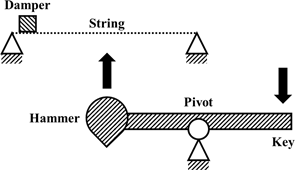
Figure 2 Source: (Russo & Robles-Linares, 2020)
While this action enables volume dynamics, vibrato, and control over the attack and duration of one’s sounds, there remained one large problem: the string would be damped for as long as the key was held down.
The harpsichord attempted to address this issue, while sacrificing some of the finer benefits of the clavichord.
For its action, when a key is pressed, the jack is lifted along with the plectrum and damper, the latter immediately releasing the string. Right after, the plectrum hits the string, generating sound. At some point, the jack meets a rail up above that stops its motion, allowing the string to resonate for as long as the key is held down. When the key is finally let go, the jack falls such that its plectrum does not hit the string a second time (Russo & Robles-Linares, 2020).
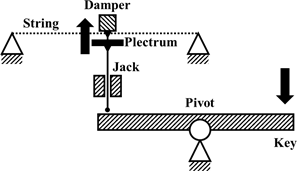
Figure 3 Source: (Russo & Robles-Linares, 2020)
Even though this solves the major issue with the clavichord, the harpsichord, in turn, has almost no volume dynamics, nor can vibrato be performed with it!
That takes us to the mid-17th century, where Bartolomeo Cristofori would invent what was known as the fortepiano – named because of its ability to play forte (loud) and piano (soft).
The action of the fortepiano is far more complex than both the clavichord and the harpsichord. When the key is first pressed, it lifts an intermediate lever; a damper connected to that lever releases the string. After a small period of time, the jack on the intermediate lever pushes the hammer up. The hammer lifts off the jack halfway to the string and uses its existing momentum to hit the string.
If the key was immediately released, the string is immediately damped, making a staccato (short) sound, as the mechanism returns to its resting position. If the key is held down, the string is undamped and free to resonate; the hammer falls back down onto the jack. After the key is released, the hammer returns to its resting position and the string is damped, muting the sound (Russo & Robles-Linares, 2020).
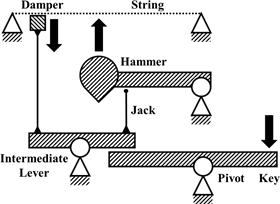
Figure 4 Source: (Russo & Robles-Linares, 2020)
In essence, the fortepiano was the combination of the good of both the clavichord and harpsichord – dynamics and vibrato, along with volume and an ability to sustain sound. In many ways, the fortepiano is similar to the grand pianos of today, but with a few key differences…
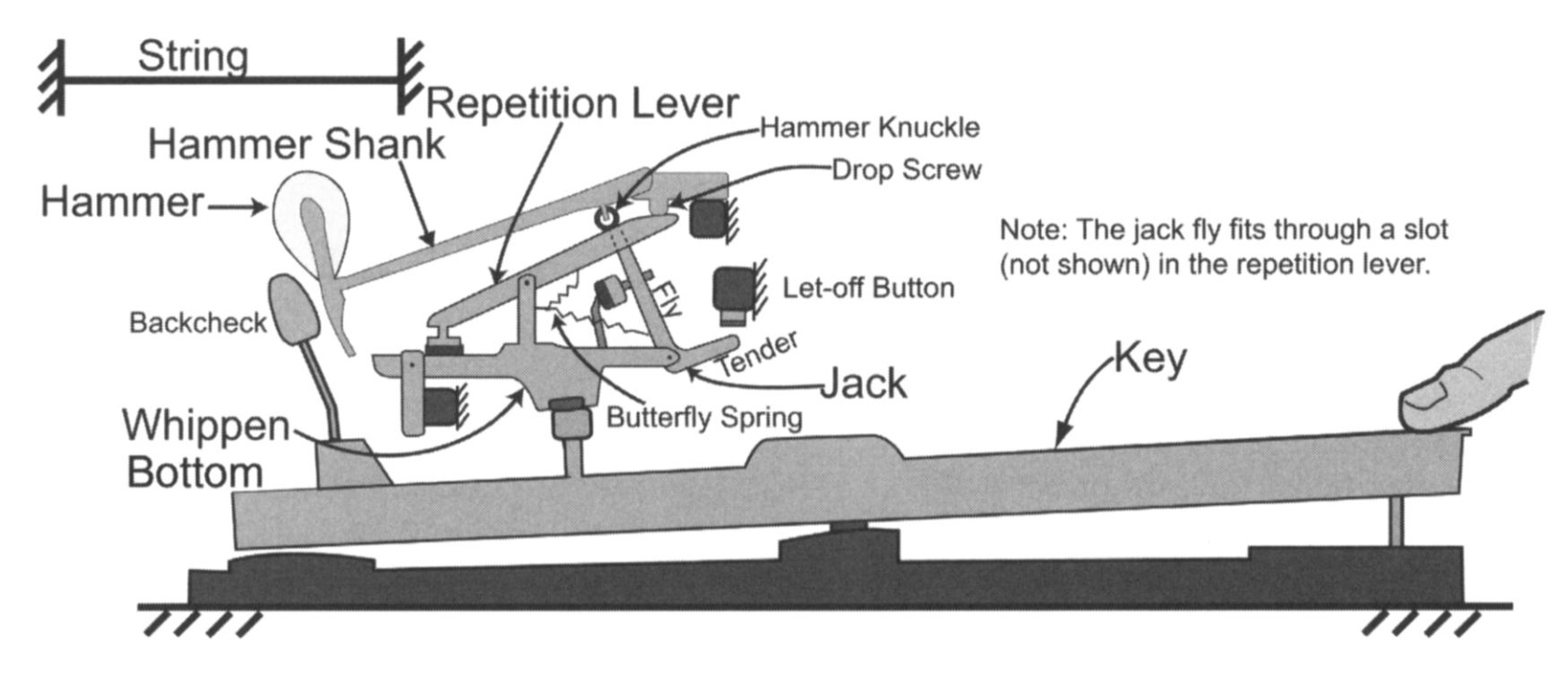
Figure 5 Source: (Brent et al., 2011)
…Quite a lot of differences, in fact. From a first glance, this diagram seems far removed from the likes of the fortepiano, but most of the underlying theory remains the same.
To put it simply, the goal of the grand piano action is to let the hammer hit the string to create vibration – but, most importantly, it should be fast enough that it doesn’t damp the string. Efforts to reduce that time have resulted in the complex system seen in Figure 5… each part of that mechanism plays its own role in giving as much control to the pianist as possible (Brent et al., 2011).
Control is an important part of playing the piano, in my own experience. The difference between a grand piano and an electronic MIDI keyboard is like night and day. Even the smallest, involuntary actions when playing a grand result in minor yet noticeable changes – and the best of the best (which, unfortunately, doesn’t include me) are able to manipulate each and every facet of control given to them.
As we close the hood on the fascinating world of the piano action, I hope you’ve gained a proper appreciation for the instrument! The fact that we’ve been able to manufacture such a sleek design, fitting in all the complex mechanisms into such a small area, all while ensuring it works to perfection… it’s an engineering miracle, to be honest.
When I inevitably return to that piano in West Village, I’ll surely be thinking about the action that I’m invoking with every press.
Reference List
Brent, G. R., Yu, B., Grijalva, R., & Awtar, S. (2011). Characterizing the Feel of the Piano Action. Computer Music Journal, 35(1), 43–57. JSTOR. https://www.jstor.org/stable/41241706
Russo, M., & Robles-Linares, J. A. (2020). A Brief History of Piano Action Mechanisms. Advances in Historical Studies, 09(05), 312–329. https://doi.org/10.4236/ahs.2020.95024